
Fibermaxxing: How to Hit 30g of Fiber a Day Without Wrecking Your Gut
Fibermaxxing means eating more fiber on purpose. Most adults need 25 to 38g a day. A 33.7g sample day, a slow ramp-up plan, and who should go easy.
Fibermaxxing means eating more fiber on purpose, and the target is real: US guidelines set 14g per 1,000 calories, about 28g on a 2,000-calorie day. Australia's NHMRC says 25g for women and 30g for men; Health Canada says 25g and 38g. Most people sit near 15g, so the safe way in is slow: a few extra grams at a time, plus more water.
What is fibermaxxing?
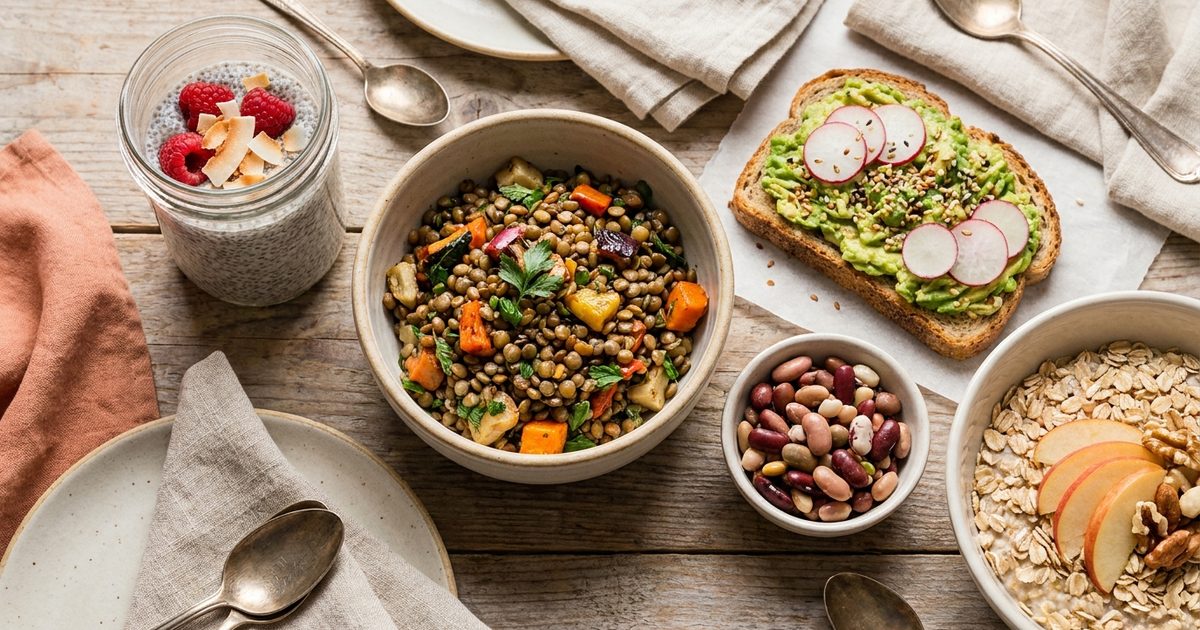
Fibermaxxing is the internet's name for deliberately loading your plate with high-fiber foods: beans, lentils, oats, berries, seeds, whole grains, and vegetables. It borrows the "maxxing" suffix from TikTok slang, but unlike most trends with that suffix, this one points at something nutrition science actually agrees with.
In a January 2026 UCLA Health article, senior dietitian Yasi Ansari, RDN, says the trend "basically is encouraging people to increase fiber intake." That's it. No powders required, no secret protocol.
It has gone well past social media. Whole Foods Market's top food trends for 2026 include "a fiber-fueled focus on gut health," and the report says that while protein is still king, "fiber is gaining traction" as people look for gut health and ways to feel fuller longer. It also flags brands adding fiber to pasta, bread, crackers, and bars. Translation: protein had its era. Fiber wants the aux.
This post is the trend plus the plan. If you want the full food list, 50 High Fiber Foods Ranked by Fiber per 100 Calories has every number.
Why is fiber suddenly trending?
Three reasons, and only one of them is the algorithm.
Almost nobody gets enough. UCLA Health, citing the Department of Health and Human Services, reports that more than 90% of women and 97% of men don't meet the recommended daily fiber intake, with most people getting around 15 grams a day. The Dietary Guidelines for Americans 2020 to 2025 call dietary fiber "a dietary component of public health concern." That's government for "everyone's low."
The guidelines leaned in. The newer 2025 to 2030 Dietary Guidelines tell Americans to "prioritize fiber-rich whole grains" and note that high-fiber foods support a diverse gut microbiome.
Protein fatigue. After years of protein everything, people want the other half of the "keeps you full" story. Fiber is it. You don't have to pick a side, either: beans and lentils bring both.
How much fiber do you need per day?
It depends on where you live and how much you eat, but the answer lands between 22 and 38 grams for adults. Here are the official numbers, straight from each country's own source.
| Country and source | Women | Men | How it's set |
|---|---|---|---|
| US: Dietary Guidelines 2020 to 2025 | 28g (19 to 30), 25g (31 to 50), 22g (51+) | 34g (19 to 30), 31g (31 to 50), 28g (51+) | 14g per 1,000 calories |
| Australia: NHMRC Nutrient Reference Values | 25g | 30g | Adequate Intake, all adult ages |
| Canada: Health Canada | 25g | 38g | Daily recommendation |
The US rule of thumb is the easiest to personalize: 14 grams of fiber for every 1,000 calories you eat. The math:
- 1,800 calories: 1.8 x 14 = 25.2g
- 2,000 calories: 2.0 x 14 = 28g
- 2,500 calories: 2.5 x 14 = 35g
Not sure what you eat in a day? The daily calorie needs calculator gives you a starting number. Pregnant or breastfeeding? NHMRC sets the Adequate Intake at 28g a day in pregnancy and 30g while breastfeeding (ages 19 to 50). That's one more reason to check in with your doctor or midwife.
So where does "30g" come from? It's a clean, memorable target that clears the US number for most adult women, matches Australia's number for men, and sits in the middle of everyone's range. Treat it as a destination, not a day-one requirement.
Can you eat too much fiber?
There's no official ceiling. NHMRC says no upper level is set for dietary fiber, because a high intake from a variety of foods isn't expected to cause substantial harm as part of a healthy diet.
The catch is speed, not amount. MedlinePlus (from the US National Library of Medicine) says eating a large amount of fiber in a short time can cause intestinal gas, bloating, and abdominal cramps. Going from 15g to 40g overnight is how fibermaxxing gets a bad reputation in the comments.
What does a fibermaxxing day look like?
Here's one realistic day that clears 30g, built from USDA FoodData Central numbers. It's different from the sample day in our high fiber foods ranking so you have two templates to rotate.
| Meal | Foods (USDA FDC ID) | Calories | Fiber | Protein |
|---|---|---|---|---|
| Breakfast: yogurt oats | Oats, 1/2 cup dry (173904) + raspberries, 1/2 cup (167755) + nonfat Greek yogurt, 1 container, 170g (170894) | 285 | 8.1g | 23.3g |
| Lunch: chickpea bowl | Chickpeas, 1/2 cup (173757) + quinoa, 1/2 cup cooked (168917) + avocado, 50g (171705) | 325 | 12.2g | 12.4g |
| Snack | Pear, 1 medium (169118) + pistachios, 1/2 oz (170184) | 180 | 7.0g | 3.5g |
| Dinner | Salmon, 6 oz cooked (175168) + sweet potato, 1 medium baked (168483) + broccoli, 1/2 cup boiled (169967) | 480 | 6.4g | 41.8g |
| Total | 1,270 | 33.7g | 81.0g |
The fiber math: 4.1 + 4.0 + 0 = 8.1 at breakfast, 6.2 + 2.6 + 3.4 = 12.2 at lunch, 5.5 + 1.5 = 7.0 for the snack, 0 + 3.8 + 2.6 = 6.4 at dinner, and 8.1 + 12.2 + 7.0 + 6.4 = 33.7g.
A few honest notes:
- Calories are for the foods alone. Cooking oil, dressing, honey, and sauce add calories and almost no fiber. Scale portions up to fit your own needs; this is a template, not a target.
- Protein didn't get benched. 81g of protein came along for free. Fiber and protein are teammates, not rivals. For more protein-forward ideas, see High Protein Foods.
- The breakfast is the cheat code. Oats plus berries is 8g before 9 a.m. If you only change one meal, change this one.
How do you start fibermaxxing without the bloat?
Slowly. MedlinePlus recommends adding fiber gradually over a few weeks to avoid stomach distress. For people with IBS, NIDDK suggests going even slower: adding fiber by 2 to 3 grams a day may help prevent gas and bloating.
Here's an example ramp from a typical 15g starting point. Adjust the pace to how you feel.
| Week | Daily fiber | One easy add |
|---|---|---|
| 1 | about 18 to 20g | Swap your usual breakfast for oats with berries |
| 2 | about 22 to 24g | Add a piece of fruit as your afternoon snack |
| 3 | about 26 to 28g | Add 1/2 cup of beans or lentils to lunch |
| 4 | about 30g | Add a vegetable side at dinner |
Rules for the ramp:
- Drink more water as you go. MedlinePlus says water helps fiber pass through the digestive system and suggests plenty of fluids, about 8 glasses of water or noncaloric fluid a day. UCLA Health's dietitian gives the same advice: increase fiber slowly and drink more water when you do.
- Expect a little gas at first. UCLA Health says most people will experience some gas and bloating when they increase fiber. A little is normal. Cramping or pain means slow down.
- Spread it out. Three meals with 8 to 12 grams each beats one 30g lentil situation at dinner.
- Food first. Every number in this post comes from whole foods. If you're thinking about fiber supplements, ask a doctor or pharmacist first, especially if you take medications.
Who should be careful with fibermaxxing?
Fiber is great for most people, but not every gut wants the same plan.
- IBS, Crohn's disease, or ulcerative colitis. UCLA Health says people with these conditions should use care when increasing fiber and may want to consult a registered dietitian. NIDDK notes that too much fiber at once can cause gas, which can trigger IBS symptoms, and your doctor may suggest a low FODMAP approach instead.
- Anyone with ongoing digestive symptoms. New or persistent pain, bloating, or changes in bowel habits are worth a doctor's visit before a diet experiment.
- Pregnancy and breastfeeding. Needs are a little higher (see the table above), and your care team can help you get there comfortably.
- A history of disordered eating. If "maxxing" anything makes food feel like a test you can fail, please work with a professional. This is about adding good stuff, never about restriction.
How I'd track fibermaxxing (and why I built it this way)
Fiber is the nutrient nobody tracks, because tracking it the old way is miserable. I used MyFitnessPal first. The numbers were fine; the problem was time. Entering a normal dinner took several minutes, and after a long day I just wouldn't do it. Add "and also check the fiber column" to that routine and you can guess how long it lasts.
That's why Nouri is built around speed. You type, say, or snap your meal, or tell Siri from the lock screen: "Hey Siri, track food in Nouri." Photos get turned into a sentence first, so you can read what Nouri thinks it saw before anything gets counted. Then every item gets its own breakdown with reasoning and a confidence rating, and you can add context like "with a tablespoon of chia" and recalculate.
For fibermaxxing specifically, Nouri has a daily fiber goal alongside your calories and protein, plus sugar and sodium goals and a per-meal vitamin scorecard. So "yogurt oats with raspberries" shows you how much of your fiber goal breakfast just covered. After a few days, a Nouri Report shows how your week actually went. Most calorie apps give you numbers. Nouri gives you answers. It's iPhone (iOS only), with a 3-day free trial.
FAQ
What is fibermaxxing?
Fibermaxxing is a social media trend about deliberately eating more fiber from foods like beans, oats, berries, seeds, and vegetables. A UCLA Health dietitian describes it as encouraging people to increase fiber intake. Whole Foods named a fiber-fueled focus on gut health as a 2026 food trend.
How much fiber should I eat a day?
US guidelines set 14g per 1,000 calories, which works out to 22 to 34g for adults depending on age and sex. Australia's NHMRC says 25g for women and 30g for men, and Health Canada says 25g for women and 38g for men.
Is 30 grams of fiber a day enough?
For most adults, yes. 30g clears the US targets for adult women, matches Australia's Adequate Intake for men, and is close to most other targets. Men in the US and Canada have higher figures (up to 34g and 38g), so they can aim a little higher once 30g feels easy.
Is fibermaxxing healthy?
The core idea, eating more fiber, matches what US, Australian, and Canadian guidelines recommend. The risk is doing it too fast, which can cause gas, bloating, and cramps. Increase gradually over a few weeks and drink more water.
How do I increase fiber without bloating?
Add fiber over a few weeks rather than all at once, as MedlinePlus recommends, and drink plenty of fluids. Spread fiber across meals. If you have IBS, NIDDK suggests adding just 2 to 3 grams a day.
What does a fibermaxxing meal plan look like?
A simple day: oats with raspberries and Greek yogurt, a chickpea and quinoa bowl with avocado, a pear with pistachios, and salmon with sweet potato and broccoli. By USDA data that's 33.7g of fiber and 1,270 calories before oils and sauces.
Can you eat too much fiber?
NHMRC sets no upper limit for dietary fiber from food. The practical problem is going up too quickly, which can cause gas, bloating, and cramps. If you have a digestive condition, check with your doctor first.
Should I drink more water when eating more fiber?
Yes. MedlinePlus says water helps fiber pass through the digestive system and suggests about 8 glasses of water or noncaloric fluid a day. UCLA Health gives the same advice for fibermaxxing.
Is fibermaxxing good for weight loss?
Whole Foods notes people are turning to fiber to feel fuller longer, and high-fiber foods like beans and vegetables tend to be filling for their calories. Weight still comes down to overall calories, so track both. If you have a history of disordered eating, work with a professional before tracking.
Is fibermaxxing safe with IBS?
Possibly, but carefully. UCLA Health advises people with IBS, Crohn's, or ulcerative colitis to use care and consider a registered dietitian. NIDDK notes too much fiber at once can trigger IBS symptoms, and a doctor may suggest a low FODMAP approach.
What is the easiest way to track fiber every day?
Use an app that tracks fiber automatically from a quick description. In Nouri, you type, say, or snap a meal, and it fills a daily fiber goal next to your calories and protein, so you can see which meals are pulling their weight.
Fibermaxxing is one of the rare trends that's actually good advice: get to around 30g, get there slowly, and bring water. Track your ramp in Nouri, grab more food ideas from High Fiber Foods, and keep your protein pulling its weight with High Protein Foods. Your gut will thank you in about four weeks.
Sources
- UCLA Health, "Is 'fibermaxxing' a sound nutrition trend?" by Sandy Cohen, January 6, 2026, uclahealth.org/news/article/fibermaxxing-sound-nutrition-trend (checked Oct 23, 2026)
- Whole Foods Market, "The Next Big Things: Our Top 8 Food Trend Predictions for 2026," wholefoodsmarket.com/trends/the-next-big-things-our-top-8-food-trend-predictions-for-2026 and wholefoodsmarket.com/trends (checked Oct 23, 2026)
- USDA and HHS, Dietary Guidelines for Americans 2020 to 2025, Appendix 1, Table A1-2, Daily Nutritional Goals (fiber 14g/1,000 kcal) and main text ("a dietary component of public health concern"), dietaryguidelines.gov PDF (checked Oct 23, 2026)
- Dietary Guidelines for Americans, 2025 to 2030, cdn.realfood.gov/DGA.pdf (checked Oct 23, 2026)
- NHMRC, Nutrient Reference Values for Australia and New Zealand: Dietary fibre, eatforhealth.gov.au/nutrient-reference-values/nutrients/dietary-fibre (checked Oct 23, 2026)
- Health Canada, Fibre, canada.ca/en/health-canada/services/nutrients/fibre.html (checked Oct 23, 2026)
- MedlinePlus (US National Library of Medicine), Dietary fiber, medlineplus.gov/ency/article/002470.htm (checked Oct 23, 2026)
- NIDDK, Eating, Diet, and Nutrition for Irritable Bowel Syndrome, niddk.nih.gov (checked Oct 23, 2026)
- USDA FoodData Central, SR Legacy (per-portion values calculated from USDA per-100g figures at USDA portion weights; 1/2 cup and 1/2 oz portions are half of USDA's 1 cup and 1 oz weights): oats, dry (FDC 173904), raspberries (FDC 167755), Greek yogurt, plain, nonfat (FDC 170894), chickpeas, boiled (FDC 173757), quinoa, cooked (FDC 168917), avocado (FDC 171705), pear (FDC 169118), pistachios, raw (FDC 170184), Atlantic salmon, farmed, cooked (FDC 175168), sweet potato, baked (FDC 168483), broccoli, boiled (FDC 169967) (checked Oct 23, 2026)
Keep reading
All articlesAre AI Calorie Apps Accurate? What the 2026 Research Actually Shows
A 2026 study found an AI photo app underestimated intake by 25%. What the research says about AI calorie apps, and why a photo can't see the oil.
GuidesIn a Calorie Deficit But Not Losing Weight? 9 Reasons and the Fix for Each
In an NEJM study, people reporting under 1,200 calories underreported intake by 47%. 9 reasons the scale won't move, with a fix for each.
GuidesHow Many Calories Do You Need While Breastfeeding? (CDC vs ACOG, Explained)
The CDC says 330 to 400 extra calories a day while breastfeeding; ACOG says 450 to 500. Why they differ and how to find your own number.
Guides'Mom Calories': What Eating Your Kids' Leftovers Really Adds Up To
3 nuggets, some crusts, cheese crackers and juice sips add up to about 297 calories a day, or 2,079 a week. The guilt-free tally, with USDA numbers.