

Why Calorie Tracking Apps Are Inaccurate (and Why It Still Works)
Labels can legally run 20 percent over, one study found 47 percent underreporting, and cameras miss oil. Every error source, and why tracking still works.
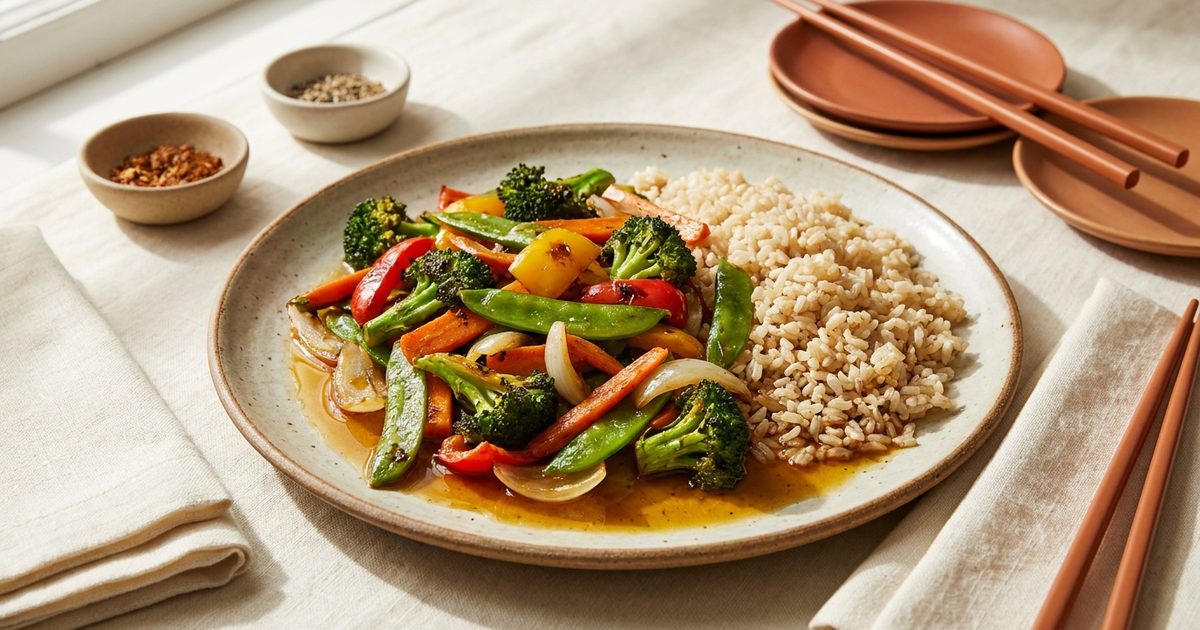
Every calorie tracker is inaccurate, including ours: US labeling law lets real calories run up to 20 percent above the label, research caught people underreporting intake by an average of 47 percent, and cameras cannot see the densest ingredients. Stacked, a carefully logged 2,000-calorie day can plausibly be 2,400 or more. Tracking works anyway: you steer by a trend, and consistent errors leave trends readable.
Error source one: the labels themselves
The foundation of every food database is the nutrition label, and the label is legally approximate. Under 21 CFR 101.9(g)(5), a food is compliant as long as its measured calories (and sugars, fat, sodium) do not exceed the declared value by more than 20 percent. The 100-calorie snack pack can legally contain 120 calories; a day built from 2,000 calories of labeled foods can legally deliver 2,400. There is no equivalent penalty for understating in the consumer's favor on those nutrients, so the incentive structure points one way.
This error is inherited by everything downstream: every app, every database, every barcode scan starts from numbers that were allowed to be a fifth low. No software can be more accurate than its inputs.
The worked arithmetic. Suppose you log exactly to labels: 400 at breakfast, 600 at lunch, 800 at dinner, 200 in snacks = 2,000 logged. If the products run at the legal tolerance limit: 2,000 x 1.20 = 2,400 actual calories, a 400-calorie invisible gap, roughly the size of the deficit most people are attempting. Real products vary in both directions and rarely all sit at the limit, but the example shows why a "perfect" log is still an estimate.
Error source two: the human doing the logging
The largest documented errors are not in the software. In a New England Journal of Medicine study of dieters who believed they could not lose weight despite eating very little, researchers measured actual energy expenditure and intake: metabolisms were normal, but subjects were underreporting food intake by an average of 47 percent (plus or minus 16) and overreporting physical activity by 51 percent. They were not lying in any deliberate sense; unlogged bites, estimates rounded down, and forgotten extras compound into enormous gaps while feeling like honest records.
The practical lesson is uncomfortable and liberating at once: when a trend contradicts a log, the log is the suspect, and the fix is coverage, not precision. The most valuable entries in your history are the embarrassing ones; the most damaging are the blanks. Our logging mistakes guide lists exactly where the missing calories hide.
Error source three: what cameras cannot see
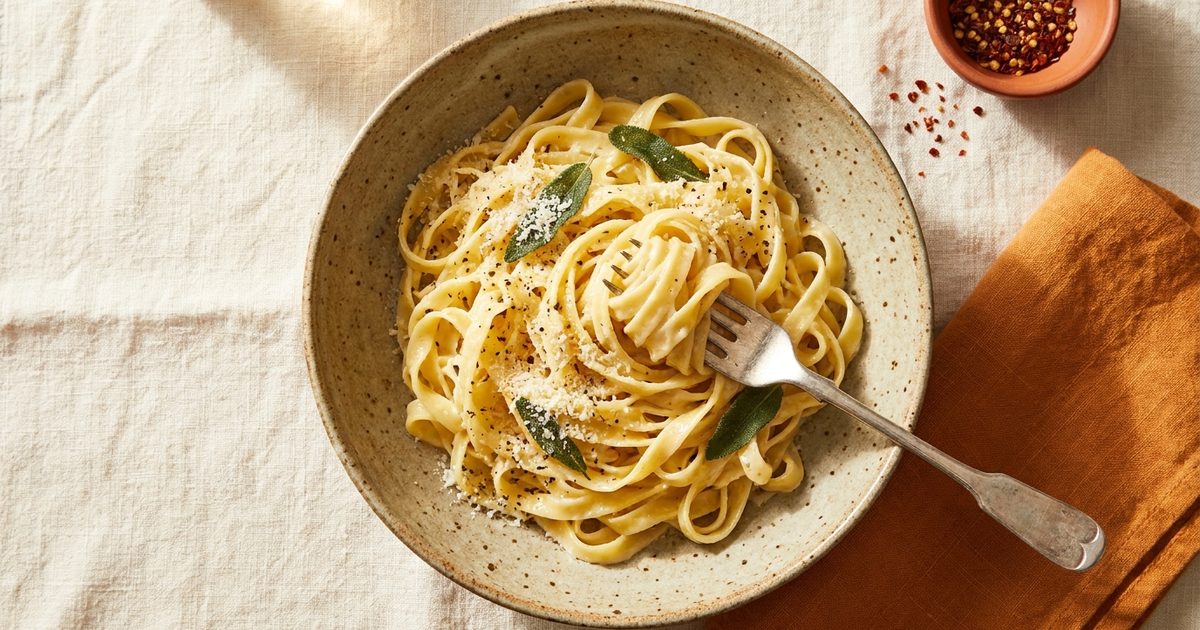
Photo-based estimation reads the surface of a plate, and the surface is where the light calories are. The pan's oil coating, the butter emulsified into the sauce, the sugar in the glaze, the second layer under the garnish: all invisible, all dense. Fat carries 9 calories per gram versus 4 for protein and carbs (the standard labeling conversion factors), so precisely the ingredients a camera cannot see are the ones that move totals most.
This one I verified on my own body before building Nouri. I ran photo trackers for months while my weight went nowhere, then started checking their outputs against what the visible ingredients added up to: the photo numbers came in consistently low, and one plate scored around 400 calories penciled out closer to 700 when I priced its actual components. The gap was not a bug in one app; it is structural to estimating mass and hidden fat from a 2D image of a surface.
That experience shaped how photo logging works in Nouri. A photo is very accurate when the food is clearly laid out on the plate, so Nouri keeps it as one of four equal ways to log, next to typing, voice, and Siri. But instead of jumping straight to a number, Nouri turns the photo into a sentence first. When I photographed a breakfast plate, it read back "Two poached eggs on avocado toast, bacon, scrambled eggs, and fresh fruit bowl," then counted 850 calories across four items. You see what it saw, and you can add what no camera can, like "fried in butter," before anything is counted. For mixed dishes, typing or saying the meal is the most precise option, because words carry the hidden layers.
Error source four: database rot
Crowd-sourced databases hold dozens of user-submitted entries for the same food with conflicting numbers, stale restaurant data, and wishful serving sizes. Search "chicken burrito" and you choose from entries spanning hundreds of calories; whichever you tap becomes your "data," and hungry people tap optimistically. Official chain data avoids this, which is why our restaurant guides use only the chains' own published numbers (the system is here).
Where the errors live, summarized
| Error source | Direction | Documented size | Your defense |
|---|---|---|---|
| Label tolerance | Understates reality | Up to 20 percent per 21 CFR 101.9(g)(5) | Nothing; accept and steer by trend |
| Self-reporting | Understates reality | 47 percent average in the NEJM study | Log everything, especially bad days |
| Photo estimation | Understates reality | Structural (cannot see density or hidden fat) | Describe meals; mention cooking fat |
| Database entries | Both directions | Varies entry to entry | Prefer official data; be consistent |
| Portion guessing | Usually understates | Unquantified | When torn, log the bigger size |
Notice the direction column: essentially every major error runs the same way, toward reality being higher than the log. That asymmetry, not bad luck, is why plateaus almost always resolve as "intake was higher than logged" rather than the reverse.
Why tracking works anyway
You are not navigating by one number; you are navigating by a trend built from hundreds of them. If your method is consistent, always describing portions the same way, always logging the oil, always covering every meal, then your errors are roughly constant, and a constant error does not hide a trend. Eat the same logged way and the scale moves the same way; that relationship is the actual instrument, and it survives 20 percent label noise easily.
What the trend cannot survive is missing data. A skipped 1,500-calorie dinner is not a 20 percent error, it is a 100 percent error, in the same direction every time. This is the entire case for making logging cheap: the accuracy war is unwinnable and unnecessary, while the coverage war is winnable and decisive. Precision is optional; showing up is not.
How the common tools handle the transparency question, with facts from each product's official site or App Store listing, checked September 26, 2026:
| App | How you log | What you see behind the number | Platforms | Price |
|---|---|---|---|---|
| Nouri | Type, voice, photo, or Siri from the lock screen | Item-by-item breakdown with the reasoning, plus Recalculate with added context | iPhone (iOS only) | $9.99/month or $39.99/year, 3-day free trial on the yearly plan |
| MyFitnessPal | Database search, barcode scan | The database entry you selected | iOS, Android, web | Free tier; $9.99/mo or $49.99/yr; 7-day trial |
| Cronometer | Database search, barcode; photo and voice on paid tier | Entry-level nutrient detail, up to 84 micronutrients | iOS, Android, web | Free tier; Gold $10.99/mo or $59.99/yr |
| Cal AI | Photo first, barcode, describe | Calorie and macro output | iOS, Android | Subscription after 3-day trial; App Store lists Unlimited purchases $2.99 to $29.99 |
My design position, stated plainly: an estimate you can read and argue with is honest, and a single confident number is not. Nouri shows what it assumed about every item, and the sentence it read from any photo, so you can correct it ("it was a large portion," recalculate), because the user holds information no sensor has.
Any single log can be off. A week of logs shows the pattern, and that is what a Nouri Report is for. After your first week, a report arrives every Sunday evening when you log 4 or more days: how many days you were on target for your goal, your Apple Health calories burned against calories eaten, and one clear focus for the week ahead.
Common mistakes this knowledge should fix
Switching apps to chase accuracy. Every app inherits label tolerance and human error; switching resets your consistency, which was the actual asset. Switch for logging speed you will sustain, not for promised precision.
Treating the log as a courtroom record. It is a navigation instrument. A rough number logged beats a precise number abandoned, every single time.
Reacting to single days. A day's weight or a day's log error is noise by design. Two-week trends are the smallest readable unit.
Skipping meals you cannot price. The unpriceable meal is precisely the one to log roughly, because its absence is the largest error you can introduce. Restaurant strategies here.
Trusting exercise burns while distrusting food labels. Device workout calories are estimates too, and generous ones. If anything deserves your skepticism first, it is the burn number you are tempted to eat back.
FAQ
How accurate are calorie counting apps?
Approximate by construction: they inherit label tolerance (legally up to 20 percent under-declared), database inconsistency, and the user's own gaps, which research has measured at 47 percent underreporting in the worst cases. They are still accurate enough to work, because trends survive consistent error.
Why is my calorie app not working for weight loss?
The likeliest answer from the evidence: intake is higher than the log shows, via missed items, small portions, and label tolerance, all of which err in the same direction. Audit coverage before questioning your metabolism; the NEJM study above found normal metabolisms behind almost identical complaints.
Are food labels accurate?
They are compliant within a tolerance: measured calories may exceed the label by up to 20 percent under US regulation. Labels are a floor-ish estimate, not a measurement, and every app inherits that.
Are photo calorie counters accurate?
They estimate from the visible surface of the plate, so they do best when the food is clearly laid out and structurally miss hidden fat, sauces, and density on mixed dishes. In my own testing before building Nouri, photo estimates ran consistently low, one 400-calorie read penciling out near 700 from its components. That is why Nouri shows the sentence it read from your photo before counting, so you can add the oil the camera missed.
Which calorie tracking app is most accurate?
No app escapes the shared error sources, so the honest answer is: the one whose logging method you will use most consistently, because consistency is what makes the trend readable. The comparison table above covers how each one logs and what it shows you. For hard numbers, our 100-meal accuracy benchmark tests Nouri and MyFitnessPal on 100 meals with every result public.
Does calorie counting work if the numbers are wrong?
Yes, as long as the wrongness is consistent. A log that runs 15 percent low every day still shows exactly when you are trending down, flat, or up, which is the decision-relevant information.
Why did I gain weight in a calorie deficit?
Short term: water, salt, and timing can mask fat loss for a week or more. Longer term: the deficit likely existed on paper only, via the one-directional errors in the table above. Give any change two weeks and audit the log's coverage first.
How wrong can a food label legally be?
Up to 20 percent over the declared calories, sugars, fat, or sodium and still compliant, per 21 CFR 101.9(g)(5). Protein and certain nutrients have a separate floor rule in the other direction.
Do restaurants underestimate calories?
Restaurant portions vary plate to plate around any published number, and unlisted independents leave you estimating. Use official chain data where it exists and component estimates elsewhere; the full method is here.
How do I make my calorie tracking more accurate?
Chase coverage, not precision: log every meal including failures, mention cooking fat and drinks, keep your estimation style consistent, and prefer official data over crowd entries. Those four moves attack the documented error sources directly.
Is a food scale necessary for accurate tracking?
No. A scale narrows one error source (portions) while the larger ones (labels, coverage) remain, and scales add friction that costs coverage. Consistent described portions protect the trend at a fraction of the effort.
How does Nouri help with inaccurate calorie estimates?
It does not remove the error; it makes the error visible, and it tells you how confident it is. In our 100-meal accuracy benchmark, Nouri averaged 92.1 out of 100, and its high-confidence answers passed 95 of 98 tests. Every estimate shows its reasoning item by item, and a photo becomes a sentence before anything is counted, so you can add what was missed, like "cooked in butter," and recalculate. A weekly Nouri Report then shows the pattern across your logs, which matters more than any single number.
Bottom line
Calorie numbers are estimates at every layer: the label may run 20 percent light, the logger misses more than they think, and the camera cannot see the oil. None of that breaks tracking, because trends built on consistent logs remain readable through constant error, and every documented failure points at coverage, not precision. So spend your effort where it pays: log everything, keep your method steady, and use tools that show their work. Nouri is built on exactly that philosophy: four ways to log (type, voice, photo, or Siri) and a breakdown you can interrogate. It also has the best Siri logging of any calorie tracking app, because missed meals are usually eaten with full hands: from the lock screen, say "Hey Siri, track food in Nouri," answer in one sentence, and the calories, macros, and what you have left for the day appear right away. For the foundations, start with Calorie Counting 101; for where your log is probably leaking, Common Food Logging Mistakes.
Sources
- Label tolerance: 21 CFR 101.9(g)(5), law.cornell.edu/cfr/text/21/101.9 (checked September 26, 2026)
- Underreporting: Lichtman SW et al., "Discrepancy between self-reported and actual caloric intake and exercise in obese subjects," New England Journal of Medicine, 1992 (47 percent intake underreport, 51 percent exercise overreport), pubmed.ncbi.nlm.nih.gov/1454084 (checked September 26, 2026)
- Calorie conversion factors (4/4/9): 21 CFR 101.9(c)(1), same source as above (checked September 26, 2026)
- App pricing: myfitnesspal.com/premium, cronometer.com/gold, calai.app and its App Store listing (all checked September 26, 2026)
Keep reading
All articlesAre AI Calorie Apps Accurate? What the 2026 Research Actually Shows
A 2026 study found an AI photo app underestimated intake by 25%. What the research says about AI calorie apps, and why a photo can't see the oil.
GuidesIn a Calorie Deficit But Not Losing Weight? 9 Reasons and the Fix for Each
In an NEJM study, people reporting under 1,200 calories underreported intake by 47%. 9 reasons the scale won't move, with a fix for each.
GuidesHow Many Calories Do You Need While Breastfeeding? (CDC vs ACOG, Explained)
The CDC says 330 to 400 extra calories a day while breastfeeding; ACOG says 450 to 500. Why they differ and how to find your own number.
Guides'Mom Calories': What Eating Your Kids' Leftovers Really Adds Up To
3 nuggets, some crusts, cheese crackers and juice sips add up to about 297 calories a day, or 2,079 a week. The guilt-free tally, with USDA numbers.