

How to Log Restaurant Meals Without Giving Up
Restaurant meals run 350 to 2,000 calories and break more tracking streaks than anything. Use official chain data, component estimates, and a worked example.
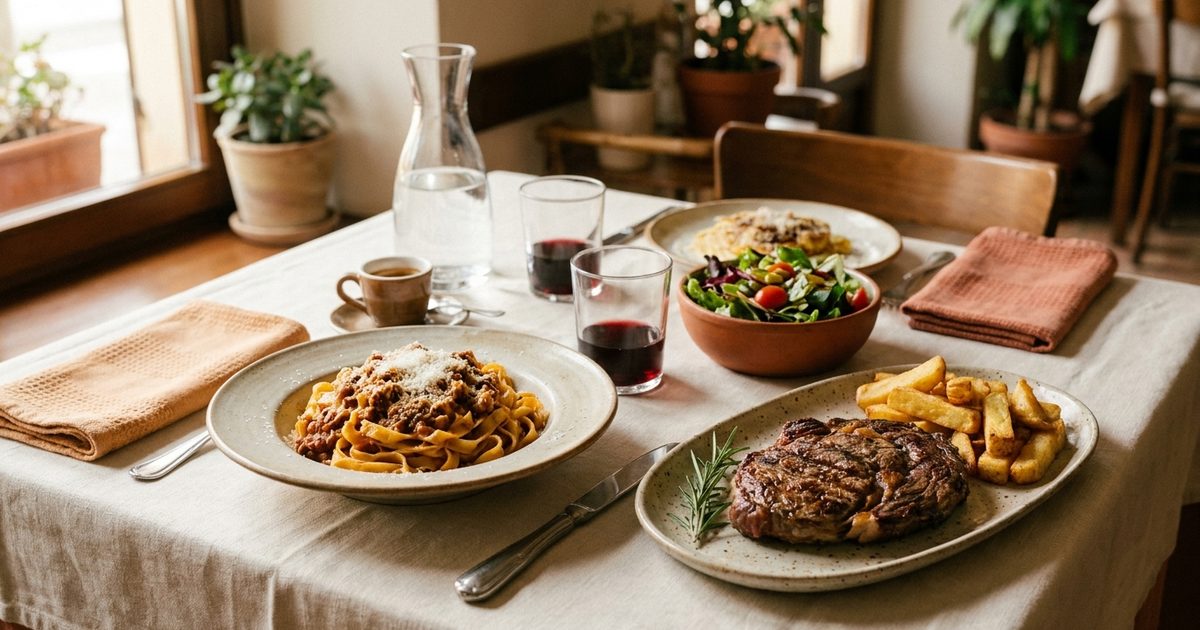
Restaurant meals are where calorie tracking goes to die: no label, no barcode, and by the official numbers we have verified, one visit can cost from about 350 calories (a lean Chipotle bowl) to about 2,000 (a loaded Chick-fil-A run). For chains, use official published data; elsewhere, estimate the plate by components and accept a range. Either way, an imperfect log beats no log.
Branch one: chains publish real numbers, use them
Every major chain publishes official nutrition data, usually more complete than people expect, and always better than a crowd-sourced database entry written by a stranger. We maintain verified, sourced numbers for the big ones, and the spread inside a single menu is the real lesson:
| Chain | A lean order (verified) | An indulgent order (verified) | Full guide |
|---|---|---|---|
| Chipotle | 350 (stripped chicken bowl) | 1,470 (double chicken burrito, loaded) | Chipotle guide |
| Chick-fil-A | 470 (grilled 12-count + small mac) | 2,000 (deluxe, large fries, 2 sauces, shake) | Chick-fil-A guide |
| In-N-Out | 460 (Protein Style Double-Double) | 1,580 (Double-Double, fries, shake) | In-N-Out guide |
| Starbucks | 5 (black cold brew) | 480 (Mocha Cookie Crumble Frappuccino) | Starbucks guide |
| Panera | 570 (half cobb + cup of soup) | 1,950 (bread bowl, cookie, lemonade) | Panera guide |
| McDonald's | 450 (Egg McMuffin + hash browns) | 1,900 (double QPC meal + McFlurry) | McDonald's guide |
| Burger King | 710 (flame-grilled chicken, small fries, Diet Coke) | 2,280 (Bacon King, large rings, chocolate shake) | Burger King guide |
| Popeyes | 480 (3 blackened tenders, red beans and rice) | 2,000 (3-piece chicken, biscuit, mac, sweet tea) | Popeyes guide |
| Panda Express | 580 (Super Greens plate, two lean entrees) | 2,540 (Bigger Plate, fried rice, rangoons, Coke) | Panda Express guide |
| Five Guys | 562 (Little Hamburger, five toppings) | 2,847 (bacon cheeseburger all the way, Cajun fries, Oreo shake) | Five Guys guide |
| Cava | 420 (Super Greens chicken bowl) | 1,500 (Falafel Crunch bowl, pita chips, large lemonade) | Cava guide |
| Sweetgreen | 550 (Kale Caesar, sparkling water) | 1,880 (Chicken Jalapeño Ranch wrap, two sides) | Sweetgreen guide |
| Raising Cane's | 480 (3 fingers, coleslaw, unsweet tea) | 2,230 (Caniac Combo, large lemonade) | Raising Cane's guide |
| Jersey Mike's | 520 (chicken Philly in a tub, Baked Lays) | 2,430 (Giant Philly, chips, cookie, Pepsi) | Jersey Mike's guide |
| Dairy Queen | 530 (cheeseburger, kids cone) | 2,500 (triple bacon burger, large fries, Blizzard) | Dairy Queen guide |
Three habits make chain data actually work. Log the drink and the sauces, which are the most-skipped items and frequently worth 300 to 400 calories together by the official numbers (a medium Coke is 270, one Chick-fil-A sauce is 140). Log the size you got, not the default: the small-to-large fry gap is 280 calories at Chick-fil-A and 160 at McDonald's. And log the customization: "no mayo" and "extra cheese" are real numbers, not rounding errors.
Branch two: independent restaurants, estimate by components
For every restaurant without published data, stop hunting for the exact dish and describe what is physically on the plate: the protein and roughly how much, the carb, the visible fat, and the portion size. Kitchens cook with more oil and butter than home cooks, and restaurant portions run large, so the two operating rules are: mention the cooking method ("fried," "creamy sauce," "buttered") because it carries real information, and when torn between two portion sizes, log the larger. Under-guessing systematically is how "I barely eat out" weeks stall a trend.
A worked example of component thinking. You are handed an unfamiliar burrito at a local spot: big flour tortilla, chicken, rice, beans, cheese. Using Chipotle's official per-ingredient numbers as reference components:
- Burrito-size flour tortilla: 320
- Chicken portion: 180
- Rice scoop: 210
- Beans: 130
- Cheese: 110
- Estimated total: 320 + 180 + 210 + 130 + 110 = 950 calories
Is the real number 950? No, it is a local kitchen, not Chipotle. But it is almost certainly in the 800 to 1,100 neighborhood, which is the information you actually need: this was a four-digit-adjacent meal, not a 500-calorie one, and dinner should be light. Component estimates put you in the right neighborhood; skipped logs put you nowhere.
The rule that outranks accuracy
Log the meal even when the estimate embarrasses you. Skipped restaurant meals fail twice: the calories still happened, and now your log claims a deficit week that was not one, which reads as "mysterious plateau" two weeks later. The New England Journal of Medicine underreporting study we cite in Calorie Counting 101 found people underreporting intake by an average of 47 percent while genuinely believing their diets were failing them; unlogged restaurant food is exactly the kind of eating that creates that gap. A rough 900-calorie guess with a real meal behind it protects your data. A blank space corrupts it.
The corollary: never let one over-budget restaurant meal cancel the day's logging. The meal cost what it cost; the only decision left is whether the rest of the day gets logged, and the answer that keeps trends readable is always yes. One expensive logged dinner inside a covered week is a data point; the same dinner followed by two dark days is how a normal weekend gets misread as a broken metabolism.
Logging restaurant meals by app
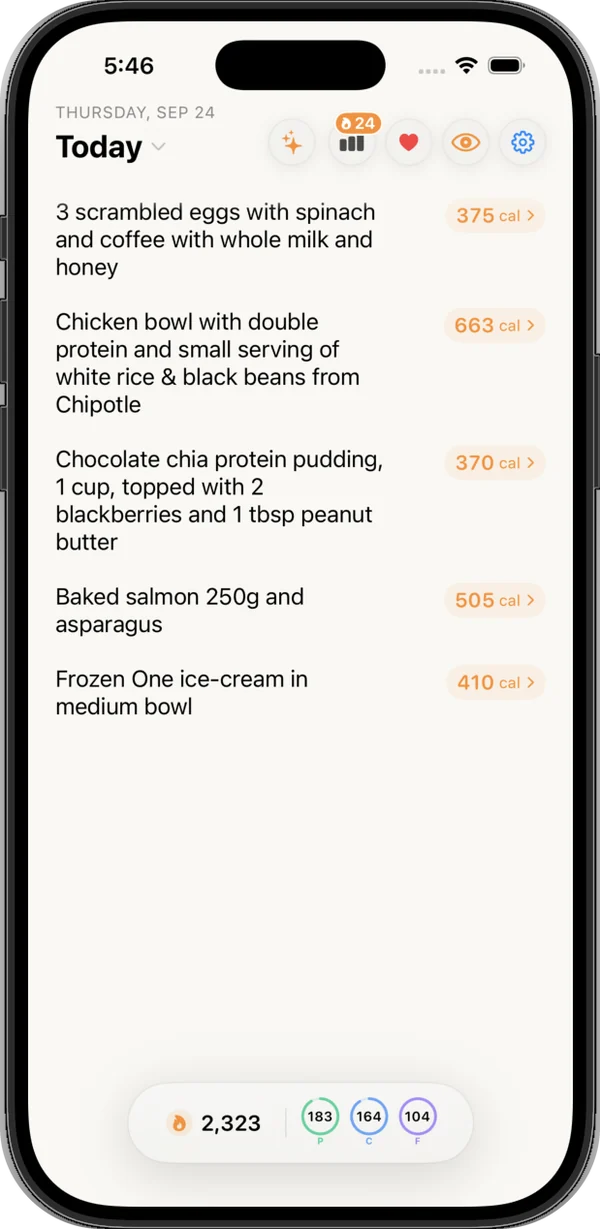
The restaurant case is where logging methods separate most sharply, because there is no barcode and often no database entry. Facts from each product's official site or App Store listing, checked September 26, 2026; logging methods as each product describes itself:
| App | How you log a restaurant meal | Platforms | Price |
|---|---|---|---|
| Nouri | Type or say the order as a sentence, snap a photo, or tell Siri with your phone locked | iPhone (iOS only) | $9.99/month or $39.99/year, 3-day free trial on the yearly plan |
| MyFitnessPal | Search the database for the dish or closest match | iOS, Android, web | Free tier; $9.99/mo or $49.99/yr; 7-day trial |
| Cronometer | Database search; photo and voice on paid tier | iOS, Android, web | Free tier; Gold $10.99/mo or $59.99/yr |
| Cal AI | Photograph the plate; describe when a photo will not work | iOS, Android | Subscription after 3-day trial; App Store lists Unlimited purchases $2.99 to $29.99 |
My own restaurant logging is the sentence method, and I built Nouri around it for a structural reason: you already know your order, you spoke it to a server, while the camera does not know what is under the garnish and the database has never heard of this restaurant. In Nouri I type exactly what I said, "carne asada tacos, three, with rice and beans," before the food arrives. Calories and macros come back instantly with per-item reasoning, so I check the breakdown against the actual plate and add "large portion" with a recalculate if the kitchen was generous. Ten seconds, done, trend intact.
Two other paths matter at restaurants. When your hands are full or your phone is in your pocket, Nouri has the best Siri logging of any calorie tracking app: say "Hey Siri, track food in Nouri" from the lock screen, answer in one sentence, and the calories and macros card appears right away with what you have left for the day, without opening the app. And at an independent place where you do not know what is in the dish, snap a photo: Nouri turns it into a sentence first so you can correct it before anything is counted, which beats a guess you never log.
Restaurant weeks also show up in your Sunday evening Nouri Report: the big dinner appears as a slip rather than a mystery, days on target are judged by your own goal, and you get one clear focus for next week. Most calorie apps give you numbers. Nouri gives you answers.
Common restaurant-logging mistakes
Logging the entrée and nothing else. The drink, the bread basket, the sauce, the shared appetizer: by the official chain numbers these run 130 to 400 calories each, and they are the difference between your log and your plateau. The full pattern is in Common Food Logging Mistakes.
Picking the flattering database entry. Databases carry a dozen versions of "chicken burrito" spanning hundreds of calories, and hungry people pick optimistically. Component estimation from what you can actually see beats motivated searching.
Guessing portions small. Restaurant portions run large, and under-guessing compounds meal after meal. When torn, log the bigger size.
Skipping the "failure" meals. The 1,500-calorie dinner is the single most important log of the week, precisely because it is the one the trend cannot explain without it.
Ordering blind at chains. Two equally satisfying orders at the same counter can differ by 500 calories (every guide in the table above shows it). Thirty seconds with the official numbers before ordering beats an hour of regret math after.
FAQ
How do I track calories at a restaurant?
Two branches: chains, use the official published numbers (our verified guides are linked above); independents, describe the plate by components, protein, carb, visible fat, portion, and log the estimate. Either way, log something for every meal.
How many calories are in a typical restaurant meal?
By the official chain data we have verified, realistic single meals run from about 350 to about 2,000 calories, and the spread within one menu is bigger than the spread between restaurants. That is why "I ate out" tells your log almost nothing without the details.
How accurate are restaurant calorie counts?
Official chain numbers describe standard portions, and real kitchens vary scoop to scoop, so treat them as good estimates rather than measurements. See Why Calorie Tracking Apps Are Inaccurate for why this does not break tracking.
Should I skip logging a meal if I do not know the calories?
No, that is the one move that damages your data most. A rough component estimate keeps the trend honest; a blank meal makes a surplus week look like a deficit week, which is how "mystery plateaus" are manufactured.
What is the lowest-calorie fast food meal?
From our verified official data: an Egg McMuffin with hash browns at 450, a stripped Chipotle chicken bowl at 350, Chick-fil-A's grilled 12-count with small mac at 470, and a Protein Style Double-Double at 460 all make real meals under 500.
Do restaurants have to post calories?
Larger US chains generally post calories on menus, which is why official chain data exists at all, and why it beats database guesses: it comes from the company's own published nutrition information.
How do I log a restaurant meal in Nouri?
Type or say the order as you ordered it: "half margherita pizza and 2 glasses of wine." You can also snap a photo of the plate, or say "Hey Siri, track food in Nouri" with your phone locked. Nouri returns calories and macros instantly with its reasoning per item so you can check the portions it assumed, and a recalculate with added context ("large portion") adjusts it.
What is a Nouri Report?
A personal weekly report built from your logs: Health Score with "Why this score?", average calories and macros against your targets, days on target for your goal, wins, slips, and one clear focus. The first arrives after 3 logged days in your first week, then every Sunday evening when you log 4 or more days, under Progress, then Reports, as part of Nouri Premium.
What should I order when I am cutting?
Protein-forward and un-fried, with the drink doing no damage: the lean column of the chain table above is a menu of real examples between 5 and 570 calories. How to Track Macros covers why protein-forward matters most in a deficit.
Is it better to photograph or describe a restaurant meal?
A photo only sees the surface of the plate; your order contains the information the camera cannot see (the sauce, the cooking method, what is underneath). Describing what you ordered carries more signal in restaurants specifically, which is why it is our default.
How do I handle drinks when eating out?
As part of the meal sentence, always: a medium Coke is 270 by McDonald's own numbers and a Frappuccino can be 440 by Starbucks'. Drinks are the most-skipped restaurant calories and among the largest.
How many calories in a restaurant burrito?
Using official component numbers, a large chicken burrito pencils out around 950 (worked example above), with a realistic range of 800 to 1,100 depending on the kitchen. As a bowl without the tortilla, subtract about 320.
Bottom line
Restaurant logging is a solved problem with two branches: official numbers for chains, component estimates for everywhere else, and a hard rule that every meal gets logged, especially the expensive ones. The worked example takes ten seconds once it is a habit, and the habit is easiest when the log is literally your order repeated: type or say the sentence into Nouri before the food lands. Keep the chain guides above bookmarked for the ordering decision, and see Common Food Logging Mistakes for the drink-and-sauce blind spots that restaurant weeks expose.
Sources
- All chain figures: our verified guides linked above, each citing the chain's official published nutrition data with the date checked (all August 29, 2026)
- Underreporting: Lichtman SW et al., "Discrepancy between self-reported and actual caloric intake and exercise in obese subjects," New England Journal of Medicine, 1992, pubmed.ncbi.nlm.nih.gov/1454084 (checked September 26, 2026)
- App pricing: myfitnesspal.com/premium, cronometer.com/gold, calai.app and its App Store listing (all checked September 26, 2026)
Keep reading
All articlesAre AI Calorie Apps Accurate? What the 2026 Research Actually Shows
A 2026 study found an AI photo app underestimated intake by 25%. What the research says about AI calorie apps, and why a photo can't see the oil.
GuidesIn a Calorie Deficit But Not Losing Weight? 9 Reasons and the Fix for Each
In an NEJM study, people reporting under 1,200 calories underreported intake by 47%. 9 reasons the scale won't move, with a fix for each.
GuidesHow Many Calories Do You Need While Breastfeeding? (CDC vs ACOG, Explained)
The CDC says 330 to 400 extra calories a day while breastfeeding; ACOG says 450 to 500. Why they differ and how to find your own number.
Guides'Mom Calories': What Eating Your Kids' Leftovers Really Adds Up To
3 nuggets, some crusts, cheese crackers and juice sips add up to about 297 calories a day, or 2,079 a week. The guilt-free tally, with USDA numbers.