

How to Track Macros: A Step-by-Step Guide (2026)
How to track macros step by step: set protein, carb, and fat targets with the exact split Nouri computes, a worked example, splits by goal, and an FAQ.
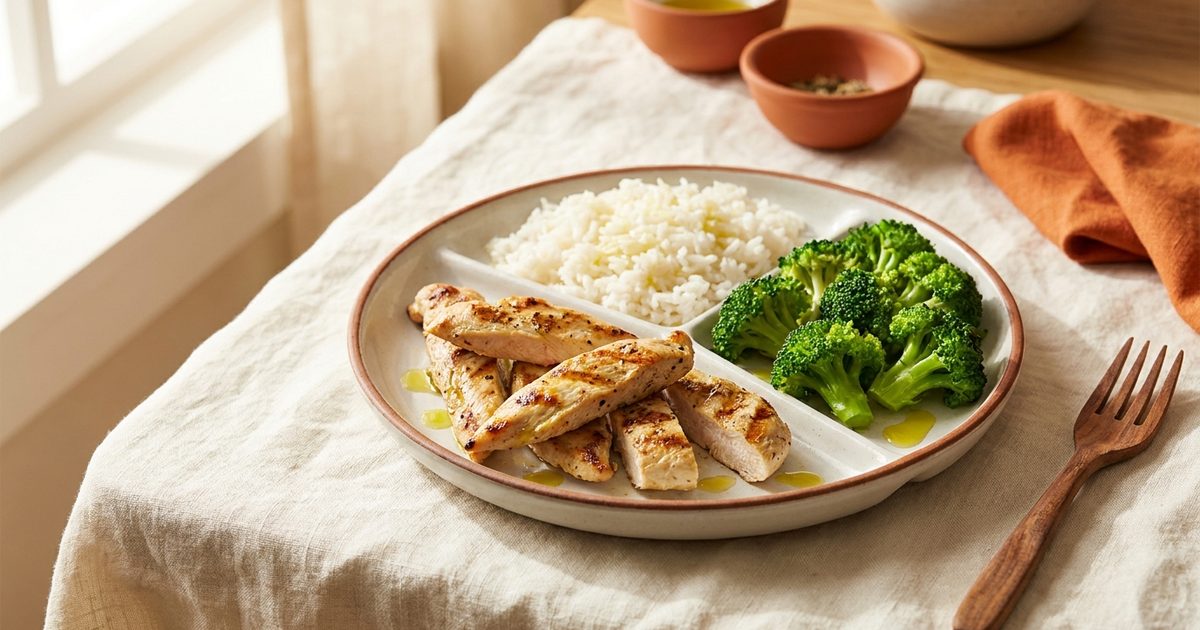
Macros are the three nutrients your calories come from: protein and carbs at 4 calories per gram, fat at 9. They matter because 2,000 calories with 60g of protein and 2,000 with 160g produce different hunger, recovery, and body composition over months. The method is protein-first: protein from body weight (Nouri's default is 1g per pound), fat around 30 percent of calories, carbs the remainder.
What each macro actually does
Protein is the structural macro. It builds and repairs muscle, and in a calorie deficit it is what convinces your body to burn fat rather than muscle. It is also the most satiating macro per calorie, which is why high-protein days feel easier at the same total. Protein is the macro most people under-eat, the one worth tracking first, and the only one Nouri anchors to your body weight rather than to your calorie total.
Carbohydrates are fuel. They power training, refill the glycogen your muscles run on, and keep your brain from treating a diet like an emergency. Quality varies enormously within the category: a bowl of oats and a bottle of soda are both "carbs" on a label, with very different effects on how full you feel an hour later. Carbs are not the enemy of fat loss; excess calories are. Carbs are simply where most people's excess calories happen to live.
Fat is the hormonal and structural macro: it supports hormone production, carries fat-soluble vitamins, and makes food worth eating. It is also the densest macro at 9 calories per gram, more than double the other two, which is why cooking oil and dressings move a day's total faster than anything else on the plate. That density is the reason fat gets a floor, not a ceiling of zero: cut it too low and hormones and adherence both suffer, but let it float unmeasured and it quietly eats your deficit.
How Nouri computes your macro targets (the exact math)
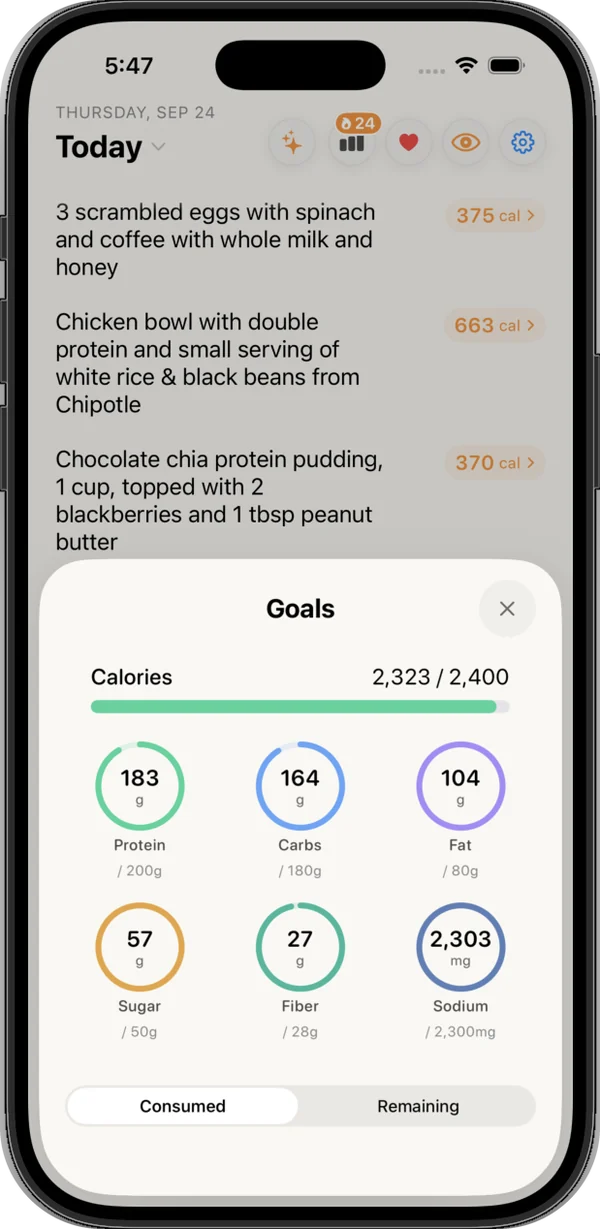
This is firsthand: the following is the actual calculation Nouri's backend runs when you finish onboarding, not a generic recommendation. After computing your calorie target (covered step by step in TDEE Explained), Nouri sets macros in this order:
- Protein first, from body weight: your weight in pounds x 1.0, or x 1.2 if you told onboarding to prioritize protein.
- Fat at 30 percent of calories: calorie target x 0.30, divided by 9 to get grams.
- Carbs get the remainder: whatever calories are left after protein and fat, divided by 4.
A worked example. Take the same person from Calorie Counting 101: 154 lb (70 kg), calorie target 1,500:
- Protein: 154 x 1.0 = 154g, which is 154 x 4 = 616 calories
- Fat: 1,500 x 0.30 = 450 calories, so 450 / 9 = 50g
- Carbs: 1,500 - 616 - 450 = 434 calories, so 434 / 4 = 109g
Result: 1,500 calories as 154 protein / 109 carbs / 50 fat. Notice what the protein-first order does: because protein is pinned to body weight, it stays high even when calories drop, and the deficit comes out of carbs and fat instead of muscle.
Reference tables
The three macros at a glance:
| Macro | Calories per gram | Main job | Where it mostly comes from |
|---|---|---|---|
| Protein | 4 | Muscle building and retention, satiety | Meat, fish, eggs, dairy, legumes, protein powder |
| Carbohydrate | 4 | Training and brain fuel | Grains, fruit, starchy vegetables, sugar |
| Fat | 9 | Hormones, vitamin absorption, satiety | Oils, butter, nuts, fatty meat and fish |
The same protein-first method across different calorie targets, for the 154 lb example person (protein fixed at 154g / 616 calories, fat at 30 percent, carbs the remainder):
| Calorie target | Protein | Fat | Carbs |
|---|---|---|---|
| 1,500 (cut) | 154g | 50g | 109g |
| 1,800 (mild cut) | 154g | 60g | 161g |
| 2,000 (maintain) | 154g | 67g | 196g |
| 2,500 (gain) | 154g | 83g | 284g |
The pattern to notice: protein never moves, fat scales gently, and carbs absorb almost the entire difference between cutting and gaining. That is what "carbs are the flexible fuel macro" looks like in numbers.
Hitting protein without a food scale
The scale-free method is a two-part habit. First, log by describing, not measuring: "grilled chicken breast, a cup of rice, salad with olive oil" carries enough information for a useful estimate, and consistent descriptions produce consistent estimates, which is what the trend needs. Second, check exactly one number during the day: protein pace. If it is 4pm and you are at 60g of a 154g target, dinner gets built around the protein, not the carb. That single glance replaces the spreadsheet.
What makes this workable in practice is per-item breakdowns. When I type "greek yogurt with granola and a scoop of whey" into Nouri like a note, it comes back as three items with grams attached and the reasoning for each shown, so I can see the whey carried 24g of the protein and adjust tomorrow if I skip it. If a portion looks off, I add "large bowl" and recalculate. Precision on any single item matters much less than the running answer to "am I going to land near my protein number today?"
A few high-leverage protein anchors from the official restaurant data we have verified: Chipotle chicken is 32g per standard serving (full ingredient math), Chick-fil-A's 12-count grilled nuggets are 38g for 200 calories (full menu), and a Double-Double is 34g (In-N-Out numbers). Eating out does not have to break a protein target.
Which app tracks macros best for you?
Facts from each product's official site or App Store listing, checked September 26, 2026; logging methods are as each product describes itself.
| App | How you log | Macro tracking | Platforms | Price |
|---|---|---|---|---|
| Nouri | Type, voice, photo, or Siri from the lock screen | Macros from a plain sentence, protein-first targets, Health Score | iPhone (iOS only) | $9.99/month or $39.99/year, 3-day free trial on the yearly plan |
| MyFitnessPal | Database search, barcode scan | Calories and macros | iOS, Android, web | Free tier; $9.99/mo or $49.99/yr; 7-day trial |
| Cronometer | Database search, barcode; photo and voice on paid tier | Macros plus up to 84 micronutrients | iOS, Android, web | Free tier; Gold $10.99/mo or $59.99/yr |
| Cal AI | Photo first, barcode, describe | Calories and macros | iOS, Android | Subscription after 3-day trial; App Store lists Unlimited purchases $2.99 to $29.99 |
If you want micronutrient depth, Cronometer publishes the biggest list. If you want macros with zero forms, Nouri takes a typed note, a spoken sentence, a photo (turned into a sentence first so you can correct it), or Siri from the lock screen, and returns the full split per item instantly. The deciding question is the same as in Calorie Counting 101: which logging motion will you still perform in week six?
Where macro tracking pays off: the weekly review
Single days are noisy; the payoff is the week. Every Sunday evening when you log 4 or more days, Nouri builds a Nouri Report: average calories, protein, carbs, and fat against your targets with progress bars, days on target judged by your goal, protein equivalents, your MVP food, and one clear focus. It lives under Progress, then Reports, in Nouri Premium. Most calorie apps give you numbers. Nouri gives you answers.
Common macro-tracking mistakes
Tracking all three macros with equal intensity. Protein deserves a hard target; fat needs a floor; carbs need almost no attention because they are the remainder. Beginners who try to hit three exact numbers daily usually quit; one number and two ranges is the sustainable version.
Chasing protein with calorie-expensive sources. A cheeseburger has protein, but at a poor exchange rate. When protein is behind at 4pm, the efficient fixes are lean: the difference between reaching for grilled versus breaded is often 200 calories for the same grams.
Ignoring cooking fat while tracking fat. The fat macro on your log is dominated by what is visible: dressing, butter, nuts. The pan's oil is invisible and dense at 9 calories per gram. Say it in the log ("cooked in oil") and the estimate can account for it; the full list of these traps is in Common Food Logging Mistakes.
Recalculating targets weekly. Macro targets are a standing hypothesis. Change them when your weight or goal changes meaningfully, not because one week's trend wobbled.
FAQ
What are macros in food?
Protein, carbohydrates, and fat, the three nutrient classes calories come from. Protein and carbs carry 4 calories per gram and fat carries 9, the standard conversion factors used on US nutrition labels.
How do I calculate my macros?
Set protein from body weight (Nouri uses 1g per pound, 1.2 with protein prioritized), give fat about 30 percent of your calorie target, and give carbs the remaining calories divided by 4. The worked example above runs the full arithmetic for a 1,500-calorie target.
How much protein do I need a day?
Nouri's default target is your body weight in pounds times 1.0 (so 154g for a 154 lb person), times 1.2 if you prioritize protein, the setting built for gaining muscle alongside a small surplus. Needs vary with goals and training; the body-weight anchor is a practical starting hypothesis you then test against results.
Is it better to count calories or macros?
Macros include calories: hit your macro targets and the calorie total is automatically right. Practically, most people do best tracking calories plus a protein target, and treating the carb/fat split as a range.
What macro split is best for weight loss?
The split that keeps protein high enough to hold muscle and calories low enough to lose fat. Protein-first does this structurally: pin protein to body weight, keep fat around 30 percent, and let carbs absorb the deficit, as the goal table above shows.
Can I track macros without weighing food?
Yes. Described portions, logged consistently, give estimates that are stable enough to steer by. The trend cares about consistency, not gram-perfect single meals.
Do I need to hit my macros exactly every day?
No. Treat protein as the number to land near daily, and carbs and fat as weekly averages. A day that is 20g off on carbs but on-target for protein and calories is a successful day.
What is the easiest way to track macros?
Describe what you ate instead of searching a database. In Nouri you type it like a note, say it, snap a photo, or ask Siri, and macros come back per item with the reasoning shown. Then watch one number: protein.
Are carbs bad for losing weight?
No. Weight loss is decided by the calorie balance; carbs are just the macro that most easily carries excess calories. In the protein-first system carbs are the flexible remainder, expanding at maintenance and shrinking in a cut.
What should my macros be on 1,500 calories?
For a 154 lb person by Nouri's method: 154g protein, 50g fat, 109g carbs, as computed in the worked example. A lighter or heavier person shifts mainly the protein anchor, which then shifts the carb remainder.
What foods are high in protein but low in calories?
The pattern is lean and unbreaded: chicken breast, white fish, egg whites, nonfat greek yogurt, and grilled rather than fried anything. From verified menu data, Chick-fil-A's 8-count grilled nuggets at 25g protein per 130 calories are among the best fast-food examples we have found.
What is a Nouri Report?
A weekly review of your own logs: Health Score with "Why this score?", macros against your targets, days on target for your goal, wins, slips, and one clear focus. Your first arrives after 3 logged days in your first week, then every Sunday evening when you log 4 or more days.
Bottom line
Macros are calorie counting with structure: 4, 4, and 9 calories per gram, protein pinned to your body weight, fat given a 30 percent floor, carbs flexing with your goal. Learn the worked example once, then let software do it daily: Nouri computes exactly this split at onboarding, returns per-item macros from one typed or spoken sentence, and reviews your week in a Nouri Report, so hitting protein becomes a glance instead of a spreadsheet (try Nouri free). For the most protein per calorie at home, see 50 high protein foods ranked. For protein ideas, see the Fast Food Protein Index and eating enough protein on GLP-1 medications. Start with Calorie Counting 101 if you have not set a calorie target yet, and TDEE Explained for where that target comes from.
Sources
- Calorie conversion factors (4/4/9) used in US labeling: 21 CFR 101.9(c)(1), law.cornell.edu/cfr/text/21/101.9 (checked September 26, 2026)
- Nouri target calculation: Nouri's own onboarding computation (protein = lbs x 1.0 or 1.2, fat = 30 percent of calories, carbs = remainder), stated firsthand
- App pricing: myfitnesspal.com/premium, cronometer.com/gold, calai.app and its App Store listing (all checked September 26, 2026)
- Restaurant protein figures: our verified chain guides linked above, each citing the chain's official published data
Keep reading
All articlesAre AI Calorie Apps Accurate? What the 2026 Research Actually Shows
A 2026 study found an AI photo app underestimated intake by 25%. What the research says about AI calorie apps, and why a photo can't see the oil.
GuidesIn a Calorie Deficit But Not Losing Weight? 9 Reasons and the Fix for Each
In an NEJM study, people reporting under 1,200 calories underreported intake by 47%. 9 reasons the scale won't move, with a fix for each.
GuidesHow Many Calories Do You Need While Breastfeeding? (CDC vs ACOG, Explained)
The CDC says 330 to 400 extra calories a day while breastfeeding; ACOG says 450 to 500. Why they differ and how to find your own number.
Guides'Mom Calories': What Eating Your Kids' Leftovers Really Adds Up To
3 nuggets, some crusts, cheese crackers and juice sips add up to about 297 calories a day, or 2,079 a week. The guilt-free tally, with USDA numbers.