
How to Lose Belly Fat: The Honest Answer (Spot Reduction Is a Myth)
Crunches don't burn belly fat: in a 6-week trial, ab work changed no fat measure. What actually works, what's a scam, and the 35/40-inch waist check.
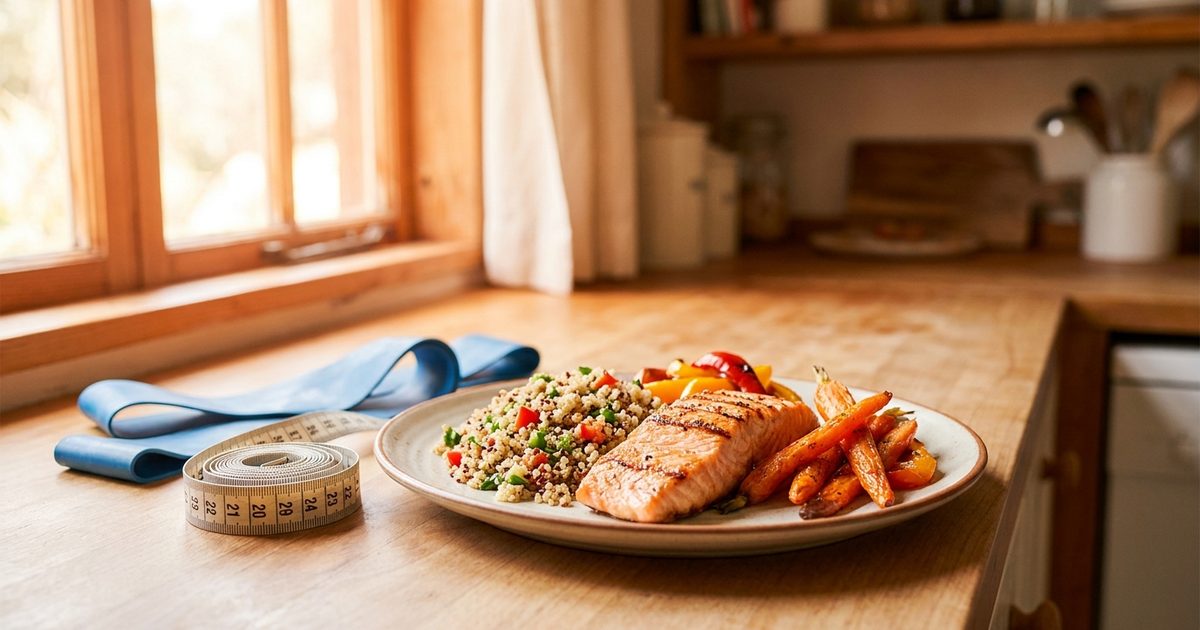
You lose belly fat the same way you lose fat anywhere: a steady calorie deficit, enough protein, regular movement, and decent sleep. You can't pick the spot: in a 6-week trial, 7 ab exercises 5 days a week caused no significant change in belly fat or waist size. The waist check worth knowing: over 35 inches (women) or 40 inches (men) raises health risk.
Can you lose belly fat by doing crunches?
No, and there's a study that tested exactly this. In 2011, Vispute and colleagues randomly split 24 healthy, sedentary adults (14 men, 10 women, aged 18 to 40) into two groups. One group did 7 abdominal exercises, 2 sets of 10 reps, 5 days a week for 6 weeks. The other group did nothing new. Everyone kept eating the same calories.
The result: no significant effect on body weight, body fat percentage, belly ("android") fat, waist circumference, or the skinfold pinches on the stomach and hip. Six weeks of crunches did not shrink the belly.
What the ab group did get: stronger abs. They hit 47 curl-ups on the final test versus 32 for the control group, 15 more reps. So crunches work. They just work at being crunches, not at deleting the fat sitting on top of them.
Training a muscle makes the muscle better, but your body pulls fat for fuel from wherever it decides, not from whatever you're squeezing. Small, short study, same lesson as everywhere else.
How do you actually lose belly fat?
You lose fat overall, and the belly comes along for the ride. When you eat a bit less energy than you burn, your body makes up the gap from stored fat across your whole body. Where it comes off first, and last, isn't up to you. A 2018 review notes sex, race, and ethnic differences in where people store fat, and a 2022 review notes visceral fat tends to increase with age. Annoying? Yes. Fixable with sit-ups? No.
So the plan is boring, which is exactly why it works:
- Run a moderate calorie deficit. Not a crash diet, not skipped meals. Find your number with the calorie deficit calculator or start from your daily calorie needs.
- Eat protein at every meal. It helps you feel full and protects muscle while you eat less (more below).
- Move most days. Cardio plus lifting, per the federal activity guidelines.
- Sleep like it's part of the plan. Because it is.
- Count the drinks. Alcohol calories are the ones nobody remembers.
- Track honestly for a few weeks. A deficit you only think you're in doesn't count.
One gentle note: if you have a history of disordered eating, please work with a doctor or registered dietitian before running a deficit. For anyone, personal calorie targets are worth checking with a professional.
Visceral vs subcutaneous fat: which one actually matters?
"Belly fat" is two different things wearing the same jeans.
Subcutaneous fat sits under the skin. It's the part you can pinch. Visceral fat sits deeper, around the organs inside the abdomen. A 2022 review in the Journal of Aging Research describes visceral obesity as increased fat "around the intra-abdominal organs" and links visceral fat to cardiometabolic disease and overall mortality.
| Subcutaneous belly fat | Visceral belly fat | |
|---|---|---|
| Where it sits | Under the skin, pinchable | Deep, around abdominal organs |
| Can you see it? | Yes | Not directly |
| Health link | "More neutral," per a 2018 review | Linked to adverse cardiometabolic outcomes |
| Best home check | Mirror, how clothes fit | Waist measurement |
| Responds to crunches alone? | No significant change in the 2011 trial | No evidence they target it |
| What reduces it | Overall fat loss | Overall fat loss; aerobic exercise showed a significant effect in a meta-analysis |
The 2018 review by Sam put it plainly: visceral fat is associated with adverse cardiometabolic consequences, subcutaneous belly fat is "more neutral," and fat on the hips and thighs is actually linked with fewer of those problems.
That's the real reason to care about your waist, and it has nothing to do with looks. A softer belly is a body, not a moral failing. Strength, energy, and blood pressure are better goals than a six-pack, and they show up sooner.
How do I measure my waist?
The National Heart, Lung, and Blood Institute (NHLBI) gives the simplest version: stand, place a tape measure around your middle just above your hipbones, and measure just after you breathe out.
| Group | NHLBI waist size linked to higher risk |
|---|---|
| Women | More than 35 inches (about 88.9 cm) |
| Men | More than 40 inches (about 101.6 cm) |
Per NHLBI, a waist above those numbers increases your risk of heart disease and type 2 diabetes. These are screening cutoffs, not a diagnosis, and not a grade on your body. If you're above them, it's a good reason to talk to your doctor, not a reason to panic.
Tip: measure every week or two, same time of day, same spot.
What actually helps you lose belly fat?
| Lever | What it does | What the evidence says |
|---|---|---|
| Calorie deficit | Creates the gap your body fills from stored fat | The core of any fat loss; nothing on this list works without it |
| Protein | Fullness and muscle protection in a deficit | Review: higher-protein diets showed more fat loss and better lean mass retention |
| Aerobic exercise | Burns energy, helps cut visceral fat | Meta-analysis: significant effect on visceral fat |
| Strength training | Keeps muscle, builds strength | Guidelines: at least 2 days a week; not a visceral fat eraser alone |
| Sleep | Helps more of the weight you lose come from fat | Trial: short sleep cut the share lost as fat by 55% |
| Fewer drinks | Removes easy, forgettable calories | A regular beer is 153 calories, per MedlinePlus |
| Steps | Low-stress aerobic activity | Counts toward 150 to 300 weekly minutes |
Protein
A 2015 review in the American Journal of Clinical Nutrition found that in tightly controlled studies, higher-protein, reduced-calorie diets led to more weight loss, more fat loss, and better preservation of lean mass than lower-protein versions, along with reductions in waist circumference. The authors suggest 1.2 to 1.6 g of protein per kg per day, with about 25 to 30 g per meal. Get your own number from the protein intake calculator, then raid our lists of high-protein foods and high-protein snacks.
Cardio and lifting
A 2012 meta-analysis of 35 randomized trials, using CT or MRI scans, found aerobic exercise had a significant effect on visceral fat. Resistance training alone did not reach significance in that analysis. That's not a reason to skip lifting. The Physical Activity Guidelines for Americans recommend at least 150 to 300 minutes of moderate aerobic activity a week, like brisk walking, plus muscle-strengthening activity at least 2 days a week. Cardio for the visceral fat, lifting for strength and muscle, and you look and feel like someone who trains. Steps count too: a brisk walk after dinner is aerobic activity.
Sleep
In a 2010 trial in Annals of Internal Medicine, 10 adults ate the same reduced-calorie diet for 14 days, once with 8.5 hours of sleep opportunity and once with 5.5. With short sleep, the share of weight lost as fat fell by 55% (1.4 kg of fat lost versus 0.6 kg), and loss of fat-free mass rose by 60%. People were also hungrier. Small study, big hint: the same diet on less sleep lost more muscle and less fat.
Alcohol
Drinks are calories that skip your memory. MedlinePlus lists a 12-ounce regular beer at 153 calories and a 5-ounce glass of red wine at 125, and notes alcoholic drinks have little to no nutritional value. You don't have to quit. You just have to count them. Our guide to tracking alcohol calories makes a night out easy to add.
What's a scam?
- Belly fat teas and "slimming" coffees. The FDA warns that many weight loss products are likely to be contaminated with dangerous hidden ingredients, are sometimes falsely sold as supplements or "all-natural," and often spread through social media with lots of positive reviews. Its list of flagged products includes several slimming teas and coffees. Talk to a health care professional before trying any of them.
- Waist trainers. Squeezing your middle changes your shape while the garment is on. It does not burn fat, and it's not a substitute for a deficit. Wear one for style if you like it. Don't wear one as a plan.
- "Fat-burning" foods. No food burns off belly fat on its own. Green tea, apple cider vinegar, and spicy food don't override your calorie balance. The genuinely helpful foods are the boring ones that fill you up for fewer calories, which is the whole idea behind volume eating.
- "Lose belly fat in 7 days" plans. Real fat loss takes weeks, not days, and that's fine.
- More crunches. See the 2011 trial. Train abs for a strong core, not as a fat loss tool.
How fast can you lose belly fat?
There's no honest "fast" for one body part. What you can control is the overall rate of fat loss, and the belly follows on its own schedule. Plug your numbers into the goal weight date calculator to see a realistic timeline instead of a fantasy one. Twelve steady weeks beats one heroic week every time, and our guide to what 12 weeks of weight loss looks like shows why. If you're in a deficit and nothing is moving, read calorie deficit not losing weight.
Why my deficit wasn't a deficit
Here's what the ab videos skip: a stalled waistline is often a tracking problem, not a crunch shortage.
I used MyFitnessPal first. The numbers were fine. Adding a normal dinner took several minutes, and after a long day I just wouldn't do it. Then I switched to AI photo trackers. Fast, but I wasn't losing weight. When I checked the estimates against what the ingredients actually added up to, the photo numbers came in low. A plate the camera called around 400 calories worked out closer to 700. The camera can't see the oil in the pan or the portion under the garnish.
Do that once a day and the "deficit" is gone. You'd blame your genetics or your ab routine. The real culprit was the 300 calories nobody counted.
That gap is why I built Nouri: fast enough that I actually do it, honest enough that the number means something.
How to track a belly fat deficit in Nouri
The freshly redesigned Nouri gives you four equal ways to add a meal: type it like a note, say it, snap a photo (Nouri turns the photo into a sentence first, so you can fix it before anything is counted), or tell Siri from the lock screen: "Hey Siri, track food in Nouri." Every estimate shows per-item reasoning and a confidence rating. Add context like "cooked in butter" and recalculate, which is exactly how you catch the hidden oil.
Nouri sets protein at 1.0 g per pound by default, and Prioritize Protein bumps it to 1.2, with fat at 30% and carbs filling the rest. It syncs with Apple Health both ways. Then Nouri Reports turn your week into a Health Score, days on target, wins, slips, and one clear focus. Most calorie apps give you numbers. Nouri gives you answers.
Crunches can't count your calories. Nouri can, in about one sentence. It's iPhone (iOS only), $9.99/month or $39.99/year, with a 3-day free trial on the yearly plan.
Common belly fat mistakes
- Doing 200 crunches a day and calling it a diet. Do them for core strength, and run the deficit in the kitchen.
- Cutting too hard. A moderate deficit you can keep beats a brutal one you quit by Thursday.
- Skipping protein or sleep. Both tilt weight loss away from fat and toward muscle.
- Forgetting drinks, oils, and bites. See common food tracking mistakes for the usual suspects.
- Treating weekends as a reset. Loose weekends can quietly eat a weekday deficit; our guide to weekend calories has the fix.
FAQ
Do crunches burn belly fat?
Not in a meaningful way. In a 2011 randomized trial, 6 weeks of ab exercises produced no significant change in belly fat or waist circumference. The ab group just got stronger abs.
Can you spot reduce belly fat?
No. In a calorie deficit your body draws on fat stores everywhere, and you can't choose the order. Training a muscle strengthens it but doesn't burn the fat on top.
How do I lose belly fat fast?
There's no fast route for one body part. The quickest reliable path is a moderate calorie deficit, protein at each meal, regular cardio and lifting, and good sleep. Crash diets tend to backfire and are not recommended.
How do I lose visceral fat?
Lose fat overall and do regular aerobic exercise. A 2012 meta-analysis of 35 randomized trials found aerobic exercise significantly reduced visceral fat, while resistance training alone did not reach significance. Lift anyway for strength and muscle.
What is the difference between visceral and subcutaneous fat?
Subcutaneous fat sits under the skin and can be pinched. Visceral fat sits deeper, around the abdominal organs, and is linked to cardiometabolic disease. A 2018 review describes subcutaneous belly fat as "more neutral" by comparison.
What waist size is considered healthy?
NHLBI says a waist over 35 inches for women or over 40 inches for men increases the risk of heart disease and type 2 diabetes. Measure just above your hipbones after breathing out. It's a screening tool, so talk to your doctor about what your number means for you.
Do belly fat teas work?
No tea targets belly fat. The FDA warns that many weight loss products may contain dangerous hidden ingredients, and its list of flagged products includes slimming teas and coffees. Check with a health care professional before trying one.
Do waist trainers help you lose belly fat?
No. A waist trainer squeezes your shape while you wear it but doesn't burn fat. Fat loss still comes from an overall calorie deficit.
Does alcohol cause belly fat?
Alcohol adds easy-to-forget calories, like 153 in a regular 12-ounce beer per MedlinePlus, and they count like any food. Track the drinks and your deficit stays real.
Does lack of sleep affect belly fat?
Sleep affects what kind of weight you lose. In a 2010 trial on the same reduced-calorie diet, 5.5 hours of sleep opportunity cut the share of weight lost as fat by 55% versus 8.5 hours, and people lost more fat-free mass.
How much protein should I eat to lose belly fat?
A 2015 review suggests 1.2 to 1.6 g of protein per kg of body weight per day, with roughly 25 to 30 g per meal. Use the protein intake calculator for your own number, and ask a dietitian if you have a health condition.
What is the easiest way to track calories to lose belly fat?
Use a tracker that takes seconds, so you actually keep doing it. In Nouri, you type, say, or snap a meal, or tell Siri from the lock screen, and every estimate shows its reasoning so you can catch hidden oil and sauces. A weekly Nouri Report then tells you how the week went and what to focus on next.
Bottom line
You can't crunch your way out of belly fat, but you can lose it: a steady deficit, protein at every meal, cardio plus lifting, real sleep, and honest tracking. Keep an eye on the tape measure for health, not for judgment. Start with the calorie deficit calculator, read how to stick to calorie tracking if you've quit before, and when you want the counting to take one sentence, grab Nouri on the App Store.
Sources
- Vispute SS, Smith JD, LeCheminant JD, Hurley KS, "The effect of abdominal exercise on abdominal fat," Journal of Strength and Conditioning Research, 2011, pubmed.ncbi.nlm.nih.gov/21804427 (checked Oct 23, 2026)
- Sam S, "Differential effect of subcutaneous abdominal and visceral adipose tissue on cardiometabolic risk," Hormone Molecular Biology and Clinical Investigation, 2018, pubmed.ncbi.nlm.nih.gov/29522417 (checked Oct 23, 2026)
- Moreira VC, Silva CMS, Welker AF, da Silva ICR, "Visceral Adipose Tissue Influence on Health Problem Development and Its Relationship with Serum Biochemical Parameters in Middle-Aged and Older Adults: A Literature Review," Journal of Aging Research, 2022, pmc.ncbi.nlm.nih.gov/articles/PMC9042620 (checked Oct 23, 2026)
- National Heart, Lung, and Blood Institute, "Aim for a Healthy Weight," waist circumference guidance, nhlbi.nih.gov/health/heart-healthy-living/healthy-weight (checked Oct 23, 2026)
- Ismail I, Keating SE, Baker MK, Johnson NA, "A systematic review and meta-analysis of the effect of aerobic vs. resistance exercise training on visceral fat," Obesity Reviews, 2012, pubmed.ncbi.nlm.nih.gov/21951360 (checked Oct 23, 2026)
- Leidy HJ et al., "The role of protein in weight loss and maintenance," American Journal of Clinical Nutrition, 2015, pubmed.ncbi.nlm.nih.gov/25926512 (checked Oct 23, 2026)
- Nedeltcheva AV, Kilkus JM, Imperial J, Schoeller DA, Penev PD, "Insufficient sleep undermines dietary efforts to reduce adiposity," Annals of Internal Medicine, 2010, pubmed.ncbi.nlm.nih.gov/20921542 (checked Oct 23, 2026)
- U.S. Department of Health and Human Services, Physical Activity Guidelines for Americans, 2nd edition, "Top 10 Things to Know," odphp.health.gov (checked Oct 23, 2026)
- NIH MedlinePlus, "Calorie count: Alcoholic beverages", medlineplus.gov/ency/patientinstructions/000886.htm (checked Oct 23, 2026)
- U.S. Food and Drug Administration, Weight Loss Product Notifications, fda.gov (checked Oct 23, 2026)
Keep reading
All articlesAre AI Calorie Apps Accurate? What the 2026 Research Actually Shows
A 2026 study found an AI photo app underestimated intake by 25%. What the research says about AI calorie apps, and why a photo can't see the oil.
GuidesIn a Calorie Deficit But Not Losing Weight? 9 Reasons and the Fix for Each
In an NEJM study, people reporting under 1,200 calories underreported intake by 47%. 9 reasons the scale won't move, with a fix for each.
GuidesHow Many Calories Do You Need While Breastfeeding? (CDC vs ACOG, Explained)
The CDC says 330 to 400 extra calories a day while breastfeeding; ACOG says 450 to 500. Why they differ and how to find your own number.
Guides'Mom Calories': What Eating Your Kids' Leftovers Really Adds Up To
3 nuggets, some crusts, cheese crackers and juice sips add up to about 297 calories a day, or 2,079 a week. The guilt-free tally, with USDA numbers.