
Why You Gain Weight in Winter (and the Fixes That Actually Work)
Winter weight gain is real but small: about 0.8 lb over the holidays in an NEJM study, and it did not come off by fall. Here is why, and how to stop it.
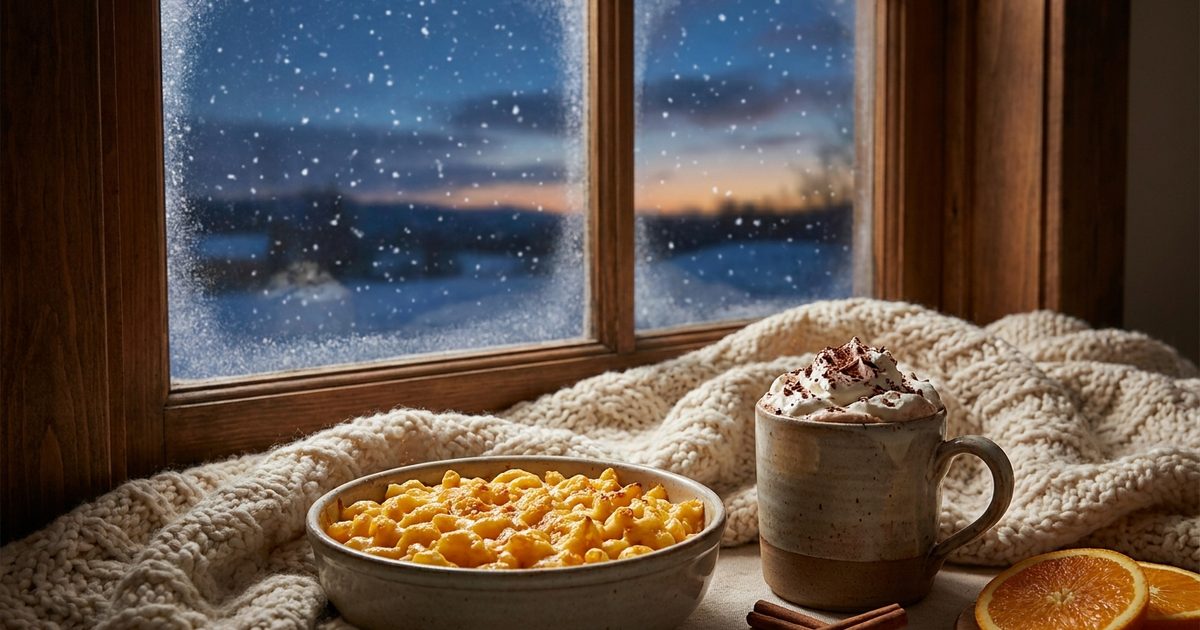
You gain weight in winter because you eat a little more, move a little less, drink more, sleep worse, and get less daylight, all at once. The gain is smaller than the myth: in an NEJM study of 195 adults, the average holiday gain was 0.37 kg (about 0.8 lb). The catch is that it was not lost by the following fall.
Winter is not out to get you. It just keeps handing you cookies in the dark.
Is it normal to gain weight in winter?
Yes, a little, and much less than the "everyone gains 5 pounds at Christmas" line you hear every December.
The classic study comes from the NIH. Researchers weighed 195 adults before, during, and after the winter holidays. Average weight went up 0.37 kg (about 0.8 lb) from mid-November to early or mid-January. It did not change significantly before the holidays, and it did not come back down after them. By late February or March, people were 0.48 kg (about 1.1 lb) heavier than in early fall. According to the NIH summary, fewer than 10 percent gained more than 5 pounds.
A separate year-long study of 593 adults in Massachusetts found the same seasonal shape: calorie intake about 86 calories a day higher in fall than in spring, the lowest physical activity in winter, and body weight peaking in winter, varying by about half a kilogram over the year.
| Study | Who | What it found |
|---|---|---|
| NEJM, 2000 (Yanovski et al.) | 195 adults, weighed 4 times plus a follow-up | Average gain of 0.37 kg (about 0.8 lb) over the holidays, not reversed by spring or summer |
| European Journal of Clinical Nutrition, 2006 (Ma et al.) | 593 adults, followed for a year | Intake 86 calories/day higher in fall than spring, activity lowest in winter, weight peaked in winter |
| Nutrients, 2023 systematic review (Abdulan et al.) | Pooled winter holiday studies | Gains of about 0.4% to 0.6% of body weight over the Christmas period in the US, Germany, and Japan |
So if the scale creeps up in December, you are not broken. You are a person in winter.
Why do I gain weight in winter?
There is no single culprit. Winter stacks several small nudges in the same direction.
1. The food environment changes for four months
From Halloween candy to Valentine's chocolate, winter is a long run of food that shows up without you asking for it: office treats, party trays, leftovers, gifts, and heavier comfort meals. The 2023 review notes that on Christmas Day some people may eat up to around 6,000 calories, roughly three times a typical daily intake. But the Massachusetts study points at something quieter: about 86 extra calories a day, across a whole season. That is less than one cookie, every day.
For the day-by-day breakdown of the big feasts, see our guide on how to not gain weight during the holidays. This post is about the other 100-plus days.
2. You move less when it is cold and dark
In the Massachusetts study, physical activity was lowest in winter and highest in spring.
In the NIH study, activity was one of only two factors linked to weight change. People who reported being much more active, or much less hungry, gained the least or even lost weight.
3. Drinks quietly add up
Winter is drinks season. NIH MedlinePlus lists a 12 oz regular beer at 153 calories, a 5 oz glass of red wine at 121 to 129, and a 4 oz margarita at 168. A creamy White Russian (8 oz) is 568, more than many meals.
Here is the math on a very ordinary habit: two regular beers on three nights a week is 153 × 2 × 3 = 918 calories a week. From November 1 to the end of February, about 17 weeks, that is 918 × 17 = 15,606 calories, and none of it felt like overeating. Our guide on how to track alcohol calories has the full drinks list.
4. Short sleep makes you eat more
Late nights, early dark, and holiday travel can wreck sleep. In a controlled 2022 study in the Journal of the American College of Cardiology, healthy adults who were limited to 4 hours of sleep for two weeks, with free access to food, ate more calories than when they slept normally. They burned about the same, gained more weight, and added more belly fat.
5. Less daylight can hit your mood and appetite
For some people, winter is more than a vibe shift. The National Institute of Mental Health lists overeating, especially craving carbohydrates, and weight gain among the symptoms of winter-pattern seasonal affective disorder (SAD), along with oversleeping. If winter brings persistent low mood, that is a real condition with real treatments, like light therapy, so talk to a doctor rather than trying to diet your way through it.
| Winter nudge | What the research says | The fix |
|---|---|---|
| Food everywhere | Intake about 86 cal/day higher in fall than spring | Plan the treats you want, skip the ones you don't |
| Moving less | Activity lowest in winter | Set a small, indoor-proof step floor |
| Drinks | 153 per beer, 121 to 129 per glass of wine | Count by the glass, alternate with water |
| Short sleep | Sleep restriction raised calorie intake | Protect a bedtime, especially in December |
| Dark days | SAD can bring carb cravings and weight gain | Morning light, and see a doctor if mood drops |
Why the winter pound is the one that sticks
This is the part the "it's only a pound" crowd misses. In the NEJM study, the holiday gain was not reversed in spring or summer. Between late winter and the next fall, weight did not change significantly. The authors concluded the net fall and winter gain probably contributes to the weight people gain over adulthood.
The math is not dramatic, which is the point. If the 0.48 kg (about 1.1 lb) fall and winter gain repeated every year for 10 years, that is 4.8 kg, about 10.6 lb, and you never had a single "bad" week. Nobody wakes up 10 pounds heavier. They wake up one winter at a time.
One more thing: the scale bounce after a big salty dinner is mostly food and water, not new fat. Judge the trend over weeks, not the morning after.
Fixes that actually work (for the whole season)
None of these require a crash diet, skipped meals, or two-a-day workouts. Very low calorie plans tend to backfire, and if you have a history of disordered eating, please work with a doctor or registered dietitian on any winter plan.
Pick your treats, don't absorb them. Office cookies, the leftover candy bowl, the gift box of chocolates: decide which ones are worth it. "I'll have the good stuff at the party" beats "I ate six mediocre cookies standing by the printer."
Give your steps a floor, not a goal. Pick a daily minimum you can hit even when it is dark and cold: a 10-minute walk after dinner, a lap of the mall, pacing on calls. The NIH study's least-gaining group was the one that stayed much more active.
Build comfort food around protein. Chili, soup, stew, and roast chicken are winter food that also keeps you full. A protein anchor at each meal makes the 9 p.m. pantry raid less likely. Our lists of high protein foods and high protein snacks help, and volume eating makes a bigger bowl cost less.
Count drinks by the glass. Not "a few." The number. Alternate with water or a zero drink so the second round is a choice.
Protect your sleep. Treat bedtime like a meeting. The 4-hour sleep group in that 2022 study ate more without burning more, and nobody makes great snack decisions at 1 a.m.
Get morning light. A walk outside early in the day gets you steps and daylight in one move. If winter brings real low mood, see a doctor about SAD and light therapy.
Weigh in, or at least look. In the 2023 review, daily self-weighing and prioritizing food choices were each linked to less holiday weight gain, and using more weight management strategies was linked to less gain overall. Visibility works.
Consider maintenance as the winter goal. Holding steady from November to February is a real win, not a pause. Use the daily calorie needs calculator to find your maintenance number, and our TDEE guide explains how it works. Want to lose instead? The calorie deficit calculator keeps it moderate, and our winter arc diet plan shows how to lock in without the misery.
Why I quit tracking in the darkest weeks
I used MyFitnessPal first. The numbers were fine, that was never the problem. Tracking a normal dinner took several minutes, and after a long day I just would not do it. Winter is basically one long string of long days: dark by dinner, tired, a party on Thursday. That is exactly when tracking falls off and the drift moves in.
Then I tried AI photo trackers. Fast, but I was not losing weight. When I checked the estimates against what the ingredients actually added up to, they came in low. A plate the camera called around 400 calories worked out closer to 700, because a camera cannot see the oil in the pan. Winter food is that problem on repeat: butter in the mash, cream in the soup, cheese under the chili.
That gap is why I built Nouri. Fast enough that I actually do it on a dark Tuesday in January, honest enough that the number means something.
Tracking winter food in Nouri
In Nouri, there are four equal ways to track, so the hard days never have to be the reason you stop. Type it like a note ("bowl of beef chili with cheese and sour cream, cornbread, one beer"). Say it out loud. Snap a photo, and Nouri turns the picture into a sentence first, so you can fix "cream soup" before anything is counted. Or stay on the couch under the blanket and say "Hey Siri, track food in Nouri" from the lock screen, describe the meal in one sentence, and a card with calories, macros, and what is left for the day appears right away. That is why we call it the best Siri logging of any calorie tracking app.
Every estimate shows per-item reasoning and a confidence rating, and you can add context like "made with butter" and recalculate. Your first Nouri Report arrives after 3 days, then every Sunday when you track 4 or more days, with your Health Score, days on target, wins, slips, and one clear focus for the week. Most calorie apps give you numbers. Nouri gives you answers.
The freshly redesigned Nouri is iPhone (iOS only), at $9.99/month or $39.99/year, with a 3-day free trial on the yearly plan.
Winter adds roughly a pound when nobody's watching. So watch.
Common mistakes
- Blaming one dinner. The feast is loud, the daily drift is quiet. The ordinary Tuesdays decide the season.
- Waiting for January to start. By January the pound is already there, and the NEJM data says it tends to stay. Start the small habits now. Our sibling post on losing weight before Christmas has a realistic plan.
- Crash dieting to undo it. Eating very little for a week usually ends in a rebound. Go back to your normal target instead.
- Forgetting drinks and bites. A beer, a handful of candy, a spoon of leftovers. Our list of common food logging mistakes covers the gaps.
- Stopping tracking when it gets messy. A rough entry beats a blank one. If you have quit before, read how to stick to calorie tracking.
FAQ
Why do I gain weight in winter?
Usually a mix of small things: more food around, less movement, more drinks, worse sleep, and less daylight. Research shows intake runs higher and activity runs lower in the colder months, and weight peaks in winter. None of it is dramatic, which is why it sneaks up.
Is it normal to gain weight in winter?
Yes, a small gain is common. In the NEJM study, adults gained 0.37 kg (about 0.8 lb) on average over the holidays. It is normal, but it is also worth managing, because that gain was not lost the following spring or summer.
How much weight do people gain in winter?
Less than most people think. The NEJM study found a net gain of 0.48 kg (about 1.1 lb) from early fall to late winter, and fewer than 10 percent gained more than 5 pounds. A 2023 review found gains of about 0.4% to 0.6% of body weight over the Christmas period.
Why am I so hungry in winter?
Several things can push appetite up: short sleep, which raised calorie intake in a controlled study, more food around you, and less daylight. For some people, carb cravings in winter are part of seasonal affective disorder, which a doctor can help with.
Does seasonal depression cause weight gain?
It can. The National Institute of Mental Health lists overeating, especially craving carbohydrates, and weight gain as symptoms of winter-pattern SAD. If your mood drops every winter, talk to a doctor, because treatments like light therapy exist.
Does alcohol make you gain weight in winter?
Drinks are calories that rarely feel like food. A regular beer is 153 calories and a glass of red wine is 121 to 129, per NIH MedlinePlus. Two beers on three nights a week adds up to 918 calories a week.
How do I stop gaining weight in winter?
Keep a daily step floor, build meals around protein, count drinks by the glass, protect your sleep, and keep tracking even roughly. Holding your weight steady through February is a real win. The goal weight date calculator helps if you want to lose instead.
Will I lose the weight I gain in winter in summer?
Not automatically. In the NEJM study, weight did not drop significantly in spring or summer, so the winter gain carried into the next fall. That is why our summer body starts in winter post exists.
Should I diet during winter or just maintain?
Either is fine. Maintaining from November to February beats the average outcome in the research, and it is easier to keep up. If you want to lose, use a moderate deficit and talk to a doctor or registered dietitian for personal advice.
What is the easiest way to track calories in winter?
Use a tracker fast enough that you still do it on a cold, dark, tired evening. In Nouri you type, say, snap, or ask Siri from the lock screen in one sentence, and it splits the meal into items with calories and macros. Every estimate shows its reasoning, so you can catch the butter in the mash.
Tracking from under a blanket still counts. Let Siri do the typing.
Winter weight gain is small, real, and sticky, which makes it the easiest kind to stop early. Track the ordinary days in Nouri, pair this with how to not gain weight during the holidays for the feast days, and if January is your lock-in month, see what 12 weeks of weight loss looks like.
Sources
- Yanovski JA, Yanovski SZ, Sovik KN, Nguyen TT, O'Neil PM, Sebring NG, "A prospective study of holiday weight gain," New England Journal of Medicine, 2000, nejm.org and abstract at pubmed.ncbi.nlm.nih.gov/10727591 (checked Oct 23, 2026)
- National Institute of Child Health and Human Development, "Holiday weight gain slight, but may last a lifetime," nichd.nih.gov (checked Oct 23, 2026)
- Ma Y, Olendzki BC, Li W, et al., "Seasonal variation in food intake, physical activity, and body weight in a predominantly overweight population," European Journal of Clinical Nutrition, 2006, pubmed.ncbi.nlm.nih.gov/16340952 (checked Oct 23, 2026)
- Abdulan IM, Popescu G, Maștaleru A, et al., "Winter Holidays and Their Impact on Eating Behavior: A Systematic Review," Nutrients, 2023, pmc.ncbi.nlm.nih.gov/articles/PMC10574044 (checked Oct 23, 2026)
- Covassin N, Singh P, McCrady-Spitzer SK, et al., "Effects of Experimental Sleep Restriction on Energy Intake, Energy Expenditure, and Visceral Obesity," Journal of the American College of Cardiology, 2022, pubmed.ncbi.nlm.nih.gov/35361348 (checked Oct 23, 2026)
- National Institute of Mental Health, "Seasonal Affective Disorder," nimh.nih.gov (checked Oct 23, 2026)
- NIH MedlinePlus, "Alcoholic beverage calories" (beer, wine, cocktails), medlineplus.gov (checked Oct 23, 2026)
Keep reading
All articlesAre AI Calorie Apps Accurate? What the 2026 Research Actually Shows
A 2026 study found an AI photo app underestimated intake by 25%. What the research says about AI calorie apps, and why a photo can't see the oil.
GuidesIn a Calorie Deficit But Not Losing Weight? 9 Reasons and the Fix for Each
In an NEJM study, people reporting under 1,200 calories underreported intake by 47%. 9 reasons the scale won't move, with a fix for each.
GuidesHow Many Calories Do You Need While Breastfeeding? (CDC vs ACOG, Explained)
The CDC says 330 to 400 extra calories a day while breastfeeding; ACOG says 450 to 500. Why they differ and how to find your own number.
Guides'Mom Calories': What Eating Your Kids' Leftovers Really Adds Up To
3 nuggets, some crusts, cheese crackers and juice sips add up to about 297 calories a day, or 2,079 a week. The guilt-free tally, with USDA numbers.